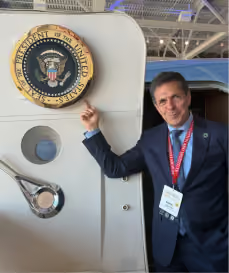
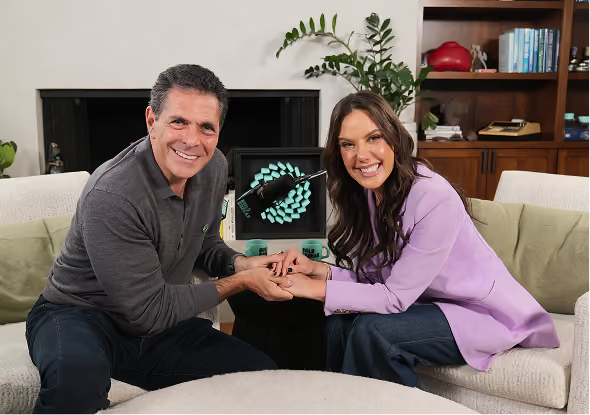
Jamie Siminoff
On Build or Break, Jamie Siminoff turned down Kevin O'Leary's offer, left Shark Tank with no deal and cried in the car. Five years later Amazon bought Ring for $1.15 billion.
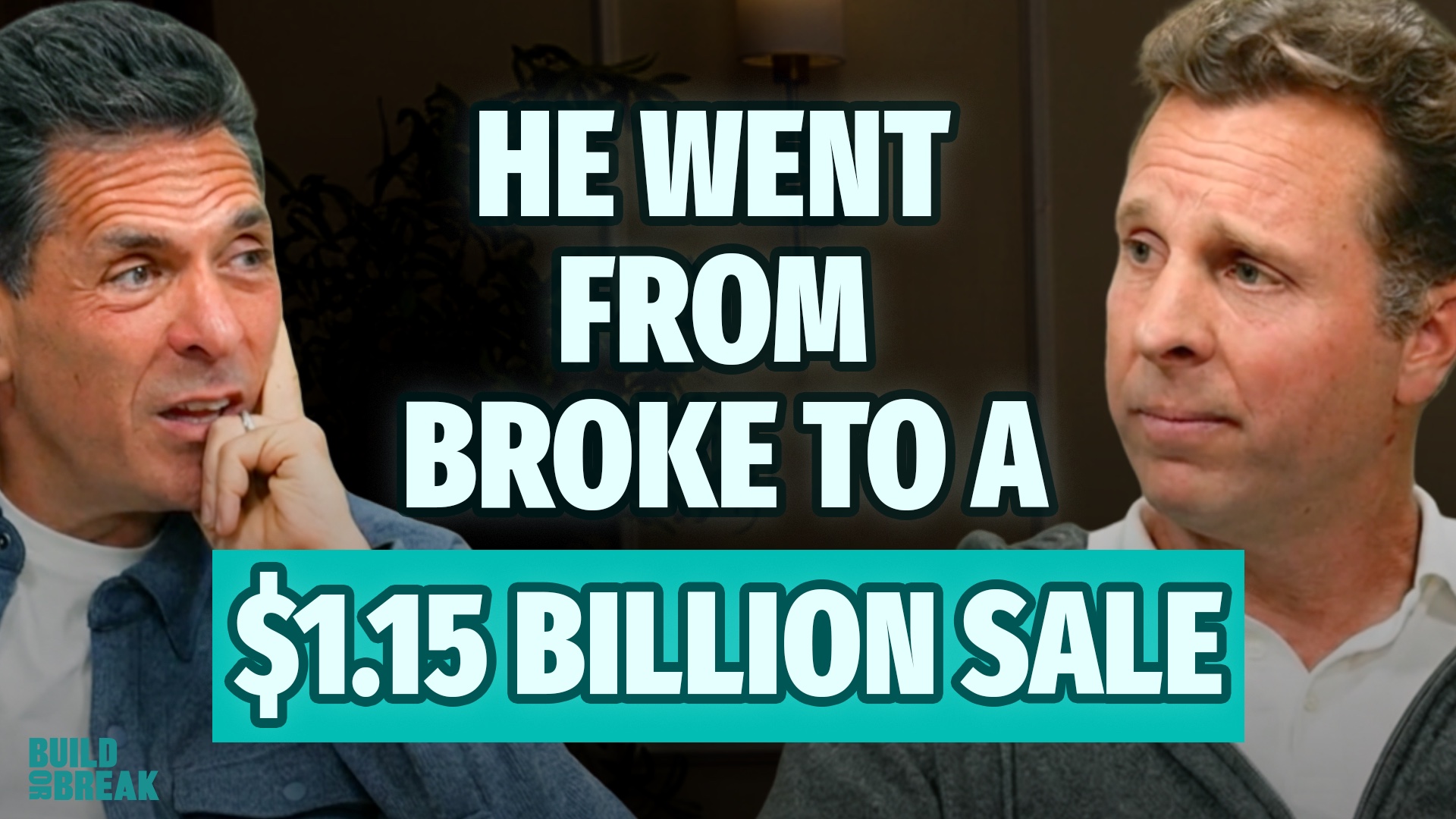
In 2013 Jamie Siminoff walked onto Shark Tank asking for $700,000 for 10% of a company called DoorBot. He had already ordered 30,000 units he could not pay for. He owed somewhere between $700,000 and a million dollars. His bank account, in his own description, went: five thousand comes in, zero. Five thousand comes in, zero.
Siminoff says Mark Cuban was the first shark out, because in 2013 a doorbell sounded like a $9 product in a $50 million market. Everyone went out except Kevin O'Leary, who offered money with a royalty attached. Siminoff did the math on a business that was already eating cash, decided he would rather die with dignity than slowly, and passed. He walked off with no deal and cried in the car on the way home. Five years later Amazon bought the company, by then renamed Ring, for $1.15 billion. O'Leary has since called it probably the biggest miss in the show's history.
On the fifth episode of Build or Break, Daniel Lubetzky takes Siminoff back through the part of that story people skip. The episode is specific about the mechanics of nearly going under: what he had actually ordered, what he actually owed, what the drive home felt like, and the detail that saved the company, which is that the episode aired in November rather than March. Product was arriving from the factory that month. Had it aired in the spring, Siminoff says, the company would not have lasted that long.
The first night on air produced $100,000 in sales, which he initially read as a failure. It did not stop. What followed is the part he considers the real lesson: he had no patents on the video doorbell, and he calls that his luckiest break. Patents would have tempted him to sit back and license. Instead, between Christmas and New Year's, he put five or six people in a room and told them they were rebuilding the entire thing in nine months. They called it Project F5, for five-star reviews. The brand, the product and the customer service all got thrown out. DoorBot became Ring when a seed investor pointed out he had used the word a thousand times in his own pitch.
Siminoff also describes the decision that shaped the company more than any product did. He knew from the moment his wife said the prototype made her feel safer at home that this was home security, not a gadget. He deliberately did not say so. Announcing that a doorbell would change home security, he argues, makes you sound like you are selling snake oil. So Ring sold convenience and waited, and told new hires privately that the mission was making neighborhoods safer. The public version arrived only after a Los Angeles homeowner watched a crime on his phone, called the police, and they caught the person.
The back half of the conversation is about what an inventor's brain actually does. As a kid in New Jersey he built a fish tank, ice and pump rig to run cold water through his blanket because the house had no air conditioning. The floodlight camera, which he says is probably one of the largest single-SKU cameras in the world, came from staring at other people's houses while driving. Before Ring there was a crowdfunding site named after Edison's street, a voice-over-IP arbitrage business, a voicemail-to-text company, and a public fight he picked with Google that got him press and, indirectly, Richard Branson as an investor. Lubetzky puts the total Ring raised at $385 million. Branson and Shaquille O'Neal were both on the cap table.
He is back at Amazon, running Ring, Blink, Key and Sidewalk, and he explains how an entrepreneur survives inside a company that size by protecting his calendar rather than his title. The most recent chapter is the hardest one. The Palisades garage where Ring was invented burned down in the Los Angeles fires. Siminoff says he stayed and helped fight them, realized the command centers were working blind while over 10,000 Ring cameras sat in that area, and built Fire Watch out of it. One family has already credited the alert with getting them out in time.
Key takeaways
- He turned down the only offer he got. Siminoff asked for $700,000 for 10%. Kevin O'Leary countered with the $700,000 against a 10% royalty on sales, falling to 7% once he had recouped it, plus 5% of the company. Siminoff calculated that a cash-hungry hardware business could not write those checks, and chose no deal over a deal that would kill him slowly.
- The air date mattered more than the pitch. Shark Tank filmed in September and aired in November, exactly as the first units arrived from the factory. Siminoff says that had it aired in March or April, as it easily could have, the company would already have been gone.
- Having no patents was the luckiest thing that happened to him. Patents would have invited him to sit back and license. Without them, the only defense was to out-build everyone, which is what produced Ring.
- He hid his own mission on purpose. Saying a doorbell would transform home security would have made him sound like a fraud, so Ring sold convenience publicly and told employees privately what they were really building, until a solved crime made it credible.
- Great hires were already inside the building. Siminoff says a lot of Ring's top management came out of Craigslist postings, and that the person who now runs planning and demand for the whole business started in its shipping department.
- Speed of cycles beats quality of ideas. Siminoff's operating metric is not time-to-failure but time-to-learn, and his answer to almost every problem is to turn the crank faster rather than wait for better information.
- Discipline meant saying no to products they could easily have built. Ring stayed out of thermostats and general gadgets because the mission was neighborhood safety, and Siminoff credits that narrowness for the company's scale.
Chapters
00:00 — Cold open: the offer he turned down
00:58 — Five companies, one billion-dollar exit, and a garage that burned down
02:13 — The garage, the new iPhone, and a doorbell that didn't exist
05:20 — Christie Street: the crowdfunding site that came first
08:08 — Funding DoorBot with pre-sales he couldn't deliver
09:30 — 30,000 units ordered, no money to pay for them
11:41 — Applying to Shark Tank: 20,000 apply, 160 make it
13:01 — First shark out: why nobody believed in a doorbell
17:06 — Kevin O'Leary's actual offer, and the royalty inside it
18:42 — Walking off with no deal, and crying in the car
21:34 — Filmed in September, aired in November: the timing that saved him
23:39 — $100,000 on the first night
25:27 — Why having no patents was the luckiest break
26:09 — Project F5: rebuilding everything in nine months
29:01 — The safety pivot, and why he kept the mission quiet
32:41 — The money behind Ring: Richard Branson and Shaquille O'Neal
34:36 — Inside the mind of an inventor
39:14 — Before Ring: voice over IP, PhoneTag, and the fight he picked with Google
47:32 — Staying an inventor inside Amazon
52:35 — Fire Watch, built after the Palisades fire
55:09 — The Mexican Inquisition
1:01:56 — Build or Break rapid-fire
About Jamie Siminoff
Jamie Siminoff is an inventor and entrepreneur, and the founder of Ring. He built the first wifi video doorbell in his garage after failing to hear his own doorbell while working, pitched it on Shark Tank in 2013 as DoorBot, and left without a deal. Amazon acquired Ring in 2018 for $1.15 billion. Siminoff calls it the largest company ever to appear on the show.
Before Ring he founded the crowdfunding site Christie Street, a voice-over-IP business, the voicemail-to-text service PhoneTag, and unsubscribe.com. He studied entrepreneurship at Babson College, where he won the business plan competition.
He left Amazon in 2023 and returned in 2025 as a vice president running Ring, Blink, Amazon Key and Amazon Sidewalk. On the episode he gives his own title as chief inventor. He is a mentor at Mucker Capital.
Daniel: Mr. Wonderful, who gave you a very tough offer. Yeah, I mean, it
Jamie: Was a brutal offer.
Daniel: And you pass on it. He said that that was the worst mistake ever made on Shark Tank. Looking back,
Jamie: The scariest part is there's no way we were going to make it. How much money did you owe? I had ordered 30,000 of these things, but I didn't have the money
Daniel: To pay for them. Are you saying you were going to literally go out of business? Oh,
Jamie: A hundred percent. You
Daniel: Had Gueros, you had Cojones. Google went into space and you -
Jamie: Oh, I went after them. Yeah, that
Daniel: Was not smart. I put the electric bulb inside the
Jamie: Fish tank. Is
Daniel: This going to end badly? Thank God we didn't get electrocuted.
Jamie: Hopefully Peter's not watching. I
Daniel: Didn't do it on purpose. I was trying to help the fish. I swear, my life.
Jamie: I pitched Ashton Kutcher. Ashton was super nice, but was like, not for me. You
Daniel: Went very quickly to
Jamie: A safety tool. We had a crime that happened. The guy saw it live on his phone, called the police, and they caught the person off of it. He had a gun on them.
Daniel: My guest today scaled and sold five companies, including one for a billion dollars. He's taken on Google and won. In 2013, he walked onto Shark Tank with almost nothing left in the bank, pitched a product everyone scuffed at and left without a deal. But then he turned that rejection into a company that's now in over 10 million American homes. When the garage where he invented his most famous product burned down, his first instinct was to start building again. And that instinct is exactly why he's here today. Jamie Siminoff, the inventor of Ring, welcome to Build or Break. Thanks
Jamie: For having me.
Daniel: Jamie, I'm so excited to be with you and I love what we're doing here because you and I become buddies and we've had a really fun lunch together and a couple dinners, but I learned so much about you. And we're going to get to the mind of an inventor because I don't think we've had a true inventor in the show so far. And the way your brain works, the way you've built so many companies have conceived and invented for me is awesome. But we're going to do that later. I want to start with Ring because it's just incredible what you've accomplished. And if we can go before the Shark Tank days, back a little bit forward to the beginnings when it was actually called Doorbot, can you just tell us that story? How did it come about?
Jamie: Yeah. I mean, I was in my garage and I was working on other inventions. I've always been an inventor, which inventors are people just trying to solve problems. And a lot of times inventors don't really make it. And so I always say I got lucky that I found something that I was able to get behind that was a big enough thing to fill my brain, which was making neighborhoods safer, not the actual doorbell and build that. But where it started was I was in my garage working on other things, couldn't hear the doorbell, just got an iPhone. And I though, why wouldn't the doorbell go to my iPhone? Looked online for a wifi doorbell, nothing existed and I built one.
Daniel: You're an inventor and entrepreneur and I do think there's a very big distinction, but you fit both because you had built multiple kinds.
Jamie: I would say I'm an inventor who realized that you have to have a company to have an impact with your inventions. The more scale you have, the more your inventions can affect the world. And so the impact is bigger with a big company. If I could get away with it, I wouldn't have a business. I'd just be building stuff.
Daniel: All of us tell ourselves our stories and that's probably very true. But when I read about you, while it's true that you work at a huge company of scale, you also had tried multiple things before DoorBot. And I'm going to give you the title of an entrepreneur, which is a very big title.
Jamie: It's fine. I'll accept it. But
Daniel: Let's start with Doorbot. So you have this idea and you're trying to solve a problem. Why is this camera not with wifi? Why is it not in the 21st century? Then what happens?
Jamie: So I built it. I put it on my front door. I hacked this thing up and it was my wife was the first one who said, "This makes me feel safer at home." That was the first, "This is more than just a gimmick, a gadget, something fun for a person who's working in the garage. This might be a little bit more than that."
Daniel: Well, I mean, it's certainly going to make you feel safer, but it also completely revolutionized the way people relate to a conventional function that's existed for thousands of years, but now with technologies with the times.
Jamie: Well, I'm going to go even deeper than that. This is a good lesson that I got lucky learning is if you can transform something that people understand, you understood what the doorbell was, where a doorbell went, that you needed a doorbell. So all these things core to a product to get someone to buy it, you understood. Then when you put a camera on it, people are like, oh, I understand this camera goes to my phone. And so by having all the doorbell things that you have a hundred years that people have been using it, and then taking that pre-awareness and just putting your spin on it, it gave me such a boost to go out there, which again, I didn't understand it when I was doing it, but once I got out there, I realized it was what an edge of that versus building something from scratch. If I had just built a camera system that did something where I-
Daniel: If you had built a Chicalambunga, it would have not benefited from the doorbell cleaner. Because it would
Jamie: Explain everything.
Daniel: But still, like you said at the beginning, in hindsight, you can connect dots like I can connect with my narrative of a kind or whatever. But tell us about your struggles at the beginning because it was not an overnight success. What happened at the beginning when you are in your garage tinkering? What's the next step?
Jamie: This was when presale sites were coming. Kickstarter, Indiegogo, just when they were starting and Kickstarter had kicked off all the hardware products. They decided they weren't going to allow any electronic products. They just did a whole thing. Kicked them out of their product. Kicked them out. Because they weren't delivering, because they're hard. So people were putting this idea up of a Chickibomba or whatever, and then they didn't deliver it. And so Kickstarter got mad and said, no more. So I said there should be a Kickstarter site for these products. That's actually what I launched. And that was called Christie Street.
Daniel: In parallel with your idea for Doorbot. I
Jamie: Wouldn't even say not in parallel.
Daniel: Predecessor.
Jamie: That was what we were launching.
Daniel: You saw that opportunity. Christie Street. Christie
Jamie: Street is the street that Edison's lab was on Christie Street in New Jersey. So I just thought it was a fun Thomas Edison. Guess what you have to do when you launch Christie Street? You need a product on there. And so when I was going to pitch it - You're
Daniel: Shitting me.
Jamie: Totally.
Daniel: You started Doorbot as a byproduct of Christie Street?
Jamie: Doorbell was this thing I had at my house and I was working on Christie Street. You
Daniel: Hadn't thought this is the product?
Jamie: So far so much that a friend of mine had a conference in Paris and he said, "You can present Christie Street, you can do it." I said, "Great." I said, "Here's the different products I'm thinking about putting on there as the first product." You just needed to create your own - You need something to launch it, right? To showcase. To showcase it and to prime the pump. And so I go through all the products and I get to the doorbell and this guy's a French guy and he's like, "This is the doorbell." And I'm like, "You really think so, Luke?"This guy, Luke Lumior. And he's like, "Yeah."
Daniel: Luke Lemoore? Yeah.
Jamie: He's
Daniel: A friend of mine.
Jamie: He's a great guy.
Daniel: The guy that we met able to block things.
Jamie: Yeah. And he said, "Do the doorbell." And I said, "Okay." I present Christie Street in L'Web in Paris and all anyone wanted to talk about was the doorbell.
Daniel: The doorbell. It's the
Jamie: Doorbell. And
Daniel: So then what happened after that?
Jamie: Exactly. All of a sudden, now we're trying to build the doorbell. We have to build it. And I'd never done it before. It's the camera, the firmware, the hardware, the battery, all these things.
Daniel: What were you at that moment? Were you an engineer? I
Jamie: Mean, I'm a self-taught engineer, so I've learned engineering by. I started with reading books. I mean, I'm pre-YouTube, pre-AI, so I had to read books. When an entrepreneur comes to me and says -
Daniel: What is a book?
Jamie: Exactly. But when an entrepreneur comes to me, it's so funny. They'll say, "I'm trying to do this thing and I'm going to hire this consulting company to do this." I'm like, "Learn it yourself." And so I taught myself how to code to a certain level. I taught myself how to lay out board, all these things. And then yes, I had to find people in the end, but I got everything pretty close. I hired a small group to do it and we started building it, but we were overwhelmed.
Daniel: Hired small contractors.
Jamie: I hired a couple in-house people. And
Daniel: Where did you get the money to start this?
Jamie: The place you shouldn't get the money. We were pre-selling Doorbot,
Daniel: And I
Jamie: Was using that money to try to build Doorbot. So
Daniel: How much money did you get through that? It
Jamie: Was hundreds of thousands. It was not enough to really do it, which was the problem. It wasn't enough to do it. I mean, at the time it was like $100,000 was like, "Oh my, we're totally fine." And then you realize that everything's millions, not hundreds of thousands.
Daniel: In your world. Because you can launch a kind bar with that amount of money. You can't launch a product like that. That's exactly
Jamie: Right. There are certain businesses that you can launch with $10,000. You can do it in your kitchen sink.
Daniel: You develop something with a sophistication of yacht, you need more resources. So then what happened?
Jamie: And you need an app and all that stuff. So we kept going and this is where Shark Tank came in.
Daniel: Before you get to Shark Tank, right before Shark Tank, you already have sales or no?
Jamie: We are pre-selling.
Daniel: Pre-selling.
Jamie: We had not shipped a single unit.
Daniel: You have not shipped a single unit. We
Jamie: Ordered units. We went to a factory, went to met this company in Taiwan and had them starting to build it and we're trying to get this thing together. We ordered the parts and we're getting things together. And looking back, the scariest part is mathematically, there's no way we're going to make it. I spent more than all of the money that I was getting in. I mean, I was going into debt to try just to engineer this product together. I had ordered 30,000 of these things to sell them, but I didn't have the money to pay for them. I
Daniel: Just want to make sure I understand and correct those. Are you saying you were going to literally go out of business? Oh,
Jamie: 100%. I'd say personally bankrupt. You're signing all this stuff. You're like, "Okay, we'll do this. We'll order this." And then all of a sudden you're like, "Well, if we don't sell these, I'm on the hook for them." And
Daniel: The supplier trusts you to.
Jamie: Yeah. I think everyone thought I probably had more sales than I did. I mean, you're playing kind of a shell game.
Daniel: What does your bank account look like before you got on Shark Tank?
Jamie: 5,000 comes in, zero. 5,000 comes in zero. I mean, you just keep - You're just barelyking money. As soon as you get some money, and then you basically pay the next person in line. So the whatever vendor, the factory said, "We need $50,000 for this." And you're like, "Okay, well, we have $50,000. We'll send that to you."
Daniel: Are you married by then or no?
Jamie: Married and I had a three-year-old.
Daniel: So are you coming home and crying, freaking out? What are you feeling before this?
Jamie: It's funny because I put myself back into that. I wasn't freaking out during that time. I should have been. But
Daniel: You were exuberant. No,
Jamie: I think I was so focused. This crazy focus of we're just going to do this. Taking that risk today would kill me. I can't even think of. I don't even know. I don't understand, honestly, that year that I did that, I really don't know what I was thinking.
Daniel: So you're barely scraping by, you're not pulling your hairs or crying at that moment before Shark Tank?
Jamie: I'm not because I'm just so. I am just - You're just
Daniel: Focusing. Just focused.
Jamie: I'm just like a sniper. I'm just focused. And
Daniel: Your wife is like, "What the fuck are you doing?" Or she's like, "Oh, Jamie, I love you. You're amazing." I
Jamie: Mean, I think this is where, again, where failure and success happens is she was like, "You're going to do this. I believe in you." And
Daniel: The baby doesn't know, just learns how to leave.
Jamie: The baby, he's now 17.
Daniel: No, but the three-year-old gave you energy.
Jamie: Yeah. I mean, he was in the garage sitting there. When
Daniel: I had my big setbacks at Kind, getting a hug from my kids was very valuable.
Jamie: If I could have taken a step back, taken a week and said, "Okay, let me just look at where we are." I would've freaked out. I probably would've tried to shut it down. I probably would've just ran. I don't even know what I would've done. So
Daniel: You applied to Shark Tank, but 20,000 people apply only 160. Let's make it.
Jamie: Yeah. I got lucky. I mean, I got the call. But
Daniel: Right now, let's talk about the other experience of you coming as a somewhat desperate, if not with a lot of pressure entrepreneur. Walk me through the application process for a minute. What does that feel like? Are you worried? How does that go? I would
Jamie: Say I took it as the same sort of focus, which is they called and said, "We want you to come on Shark Tank." The process though is then very long. At the time you actually had to even build your own set, so you had to pay for that. So I built the set in the backyard. I was so focused. I was like, "I am going to win Shark Tank." I looked at it as like - When
Daniel: You get the call and it takes a long process, is your goal to get on the show so that millions see you or is your goal to get a deal?
Jamie: My goal was that Mark Cuban, in my brain, and I think entrepreneurs do this, we create these lies and these narratives that are like. It's almost like a movie we play out. Yeah,
Daniel: I do that a lot.
Jamie: I played out that Mark Cuban was just going to say immediately, "I'm doing this deal. Box everyone else out. Come up and give me a big hug." I was going to get the money I needed and I was going to ride into the sunset. I was convinced that that was going to happen.
Daniel: And that didn't happen.
Jamie: First shark out. Mark was out within -
Daniel: Why did Mark go out so quickly?
Jamie: Like many people at the time, when I would say I work on a doorbell, this goes to the other side of the doorbell. So the doorbell had pre-awareness. That was good. The other side of the doorbell was, it was like a joke. It was like you're working on a. It'd be like me saying I'm working on steam engine cars or something right now. It sounded so old.
Daniel: It's almost too ahead of its time. But
Jamie: It sounded old, a doorbell. It was like, oh, you're reinventing the doorbell? Good luck to you. A doorbell's a $9 product. So everyone looked at the TAM, total addressable market, and they said the TAM of doorbells is what? $50 million a year? So if you got 10% of that market, that's $5 million a year. So no one could imagine. Could
Daniel: You see it? When I was doing kind in my first years, I had no visibility to what was going to come. I had the vision to grow to a $10 million company. But then once you climb, you see more. But at that point, you're just passionate about your product. And again,
Jamie: It's interesting you asked that because in one side of me, I didn't really see it. The other side, I was literally burning everything behind me and around me that it had to happen. But
Daniel: It was the passion and the product. It was not the numbers. You were like me. I'm
Jamie: Like, "It's
Daniel: Going to work.
Jamie: It's like I'm going to do this." So
Daniel: Mark passed. Have you debriefed with Mark after? Oh
Jamie: Yeah. I've talked to him many times.
Daniel: This is like, shit, I fucked up. Yeah,
Jamie: Of course.
Daniel: Mr. Wonderful, who gave you a very tough offer. Yeah, I
Jamie: Mean, it was a brutal offer. And
Daniel: You passed on it. He said that that was the worst mistake ever made on Shark Tank to not fund Ring. Well,
Jamie: It's the largest company ever to appear on Shark Tank by leaps and bounds, not even close. And so I think - Not
Daniel: That you're proud of it or anything.
Jamie: I worked really hard to have that record. Just
Daniel: A parenthetical. Jamie and I are, I think, friends. We've gone to lunch. We went to. That was
Jamie: Amazing. It
Daniel: Was an incredible place. Michelin star place in a - Go for tacos. Empty garage lot, empty gas station. And I think it closed. I was looking it up today. It did. It
Jamie: Did.
Daniel: But we've had some nice moments. I've never seen the edge you have. When Jamie showed up at the studio, we're filming this one in LA, I noticed that our friend Oscar's studio does not have a ring. Yes.
Jamie: I think that's the interesting thing. I say I'm an inventor. I don't care, whatever. But then there is this part of me that has, I guess, maybe a little bit of - Competitive
Daniel: Edge.
Jamie: Wanting to win a competitive. And so I got invited to a friend's house, this beautiful, he's a very wealthy guy who's in the credit card payments business. And he had a small conference going and he asked me to speak. And I show up to his house and he has a doorbell from a different company. And by the way, I think the competition's fine. Let everyone succeed. But he asked me to go to his house and he asked me -
Daniel: Fuck him.
Jamie: Your words. And so I kicked the doorbell off of his door, got a picture of it, and I made it my first slide with the presentation because I thought it'd be so funny. And while he gets up, he introduced me. It's like 50 people in his house. It's a small thing. And he says, "I'm really sorry, Jamie. I guess I have a different doorbell than a ring and I guess we should have whatever." I said, "No, don't worry." And I take it out of my pocket and I show him and he goes, "Yeah, that's like the one I have." And I said, "No, that's the one from your front door." And so we had a good laugh. We replaced it with a ring.
Daniel: You are an inventor, but you take risks. You an entrepreneur. And I think one of the things that is underappreciated when we're talking and coaching, that's why Mr. Wonderful sometimes just says it like it is, you have to have a competitive edge. You cannot win if you don't have the backbone to fight, to fight for your team, to fight for your children, to fight for your product. You have to have that competitive edge.
Jamie: Yeah. I think that is something just in life in general that you have to be willing to fight for what you believe in. And I think if you're going to do a product, you should believe in it. If you're going to do a company, you should believe in it. And I think people always say it's not personal, it's business. And it's like business is very personal to me. You
Daniel: Are on Shark Tank. Mark's out. Everyone else is out except Mr. Wonderful. Kevin gives you. Do you remember this deal he offered you?
Jamie: He gave me. So I asked for $700,000 for 10%. So it was 700,000 for 10%, but it had a royalty in it. I
Daniel: Would've taken that deal. Why didn't you invite me?
Jamie: Yeah, exactly. I wish you were on at the time, trust me. But again, what's so funny now is people say, oh, of course you didn't want the money. They look at it from now me and they're like, why would you have wanted the money? It's like, of course I wanted the money. I was dying for the money. And I really did - And
Daniel: The expertise. You wanted Mark because he understood that's - I wanted
Jamie: Money. He
Daniel: Should have the money on him.
Jamie: But I did want Mark because Mark was the tech. Yeah,
Daniel: Exactly.
Jamie: Of all the guys up there, he would've been the one or the people up there, I should say. He could
Daniel: Have helped you.
Jamie: We're the one that really had the most - Any shark
Daniel: Could have helped you. Mark would have helped you. Lori would have
Jamie: Been good, but again, I actually would have loved a duel with Lori also because -
Daniel: Who else was on your panel? It was Mark, Lori, Kevin. Damon.
Jamie: Damon.
Daniel: And Robert. And so they're all out except Kevin who offers you to suck the blood out of your system. Which
Jamie: I'm there and I'm like, I know that that type of deal with my business, which is just eating cash, is not going to be able to write checks to Kevin.
Daniel: Did you consider it or you didn't consider it?
Jamie: I did. No, I was up there and I was thinking I might as well just take it to live another day. But I have had this thing where I'm like, I'd rather die with dignity than die with sort of slowly. And so it was like, you know what? I'm not going to do this because this is going to lead. We're not going to make it if we take this deal.
Daniel: But you sweated and considered it. Oh
Jamie: Yeah. Oh yeah.
Daniel: So then what happens? I
Jamie: Walk off, no deal. We filmed in September. That
Daniel: Night or that evening, what happens? How do you feel? They
Jamie: Film it in Los Angeles. I live in Los Angeles. The garage, the office was in Los Angeles. And so I drive home and I did cry in the car. I mean, it was like - Literally
Daniel: Cried.
Jamie: Cried.
Daniel: What are you thinking?
Jamie: Just that was it. Because you play this narrative. I pushed myself to this thing like this is going to be it. A miracle's going to happen. All these things lined up and I'm going to have the money and I'm going to come back and we're going to finish this and it's going to. And again, at that point it wasn't like we're going to build a billion book. Did you think you might
Daniel: Not make it? Oh,
Jamie: In the drive home? But by the time I got home, I was back to like, okay, well.
Daniel: In one drive, you go from grief to acceptance to conviction. And the
Jamie: Conviction was that also was very clear at that point I could not stop. I had to make this work or there was going to be real impact to my family to. If I could have in that car, if I could have just walked away, no harm, no foul, I mean 100%. Throwing
Daniel: The towel.
Jamie: 100% I would have.
Daniel: I had a directionally similar dark moment right before launching kind. My dad just passed away. It's 2003. We have lost half of our business in the preceding company called PeaceWorks. I cannot make ends meet. I can barely pay payroll. My salary was $24,000. 10 years I've been doing this with PeaceWorks and we have the concept of what's going to become kind. We go around the table to decide whether we launch what would become kind. I swear, Jamie, I was this far away from throwing in the towel and part of me was hoping that the rest of my team gives me the permission for all of us to take three months to find a job, but we just took a vote and said, let's try it one time. Literally, if we had taken a vote and. Sometimes I ask myself whether I really would've given up, but I literally took a vote with a team and we took a unanimous vote to do it. But would I have really given up? I'm not a hundred percent sure, but I certainly put it on the table.
Jamie: I mean, the lucky thing I had is, and again, lucky enough, but is if we had stopped, I owed so much money that I couldn't take that vote. I tell you, I would've walked it that way. How
Daniel: Much money did you owe at the time?
Jamie: It was probably 700,000 to a million of stuff that we had. Again, we had guaranteed future product, whatever, as we were ordering all this stuff. So it was bills that were coming that I couldn't stop at that point. September 11th, we filmed, a memorable date. And
Daniel: When did that air? So
Jamie: This was the key. So they tell you when you get off, they're like, "But you don't even know if it's going to air." Yeah.
Daniel: A good historically 40% don't air. Don't
Jamie: Air. So I was worried it wouldn't air, but they don't tell you. And I'm asking them as I'm leaving like, "Hey," and they're just like, "We'll call you." I'm like, "Can I call you? We'll call you." I didn't know. It ended up airing in November, which- Which
Daniel: Was good for you. Every day was worse for you, right? It was
Jamie: Amazing. I mean, it aired in November. We just started to get product delivered from the factory. We had it basically ready to come over. So it aired literally right when we were able to ship. If it had aired, that season went till I think April. If it had ended up airing, which they could have aired it in April, March, whatever. I don't think we still would've been in business by then. I don't think
Daniel: We would've
Jamie: Made it till then because we just wouldn't have had the velocity to sell. So now
Daniel: You enter class act two of the play or act three. I don't know. Holy shit.
Jamie: Then
Daniel: You go on turbo, right? I mean,
Jamie: Will we air in November? We're still pitching to get money. We're still moving forward. We're still doing it. No idea how we're going to get there, but we're still going. I get introduced to Ashton Kutcher. I pitch Ashton Kutcher in his trailer of My Two Men or whatever that -
Daniel: Before airing?
Jamie: After taping before airing.
Daniel: And no guarantees that you'll air. No
Jamie: Guarantees it'll air. I'm in the trailer. I pitch him the whole thing. Ashton was super nice, but was like not for me, which was crazy. I pitched Ashton and he was dating Mila Kunis at time. She's sitting in the back. I love Mila Kuni. She's amazing. She's asking questions. I'm in this little trailer on the set. He's like, "Okay, I have to go." I start walking back. Again, it is like a Hollywood movie and my phone rings and it is none other than Shark Tank calling to say, "You're going to go on air in November, whatever." I actually thought to myself, should I go run back to try to get Ashton? I'm like, "No." Even I had more respect than that at that time. And then definitely when we went on - Did you
Daniel: Cry tears of joy?
Jamie: No, more just I think it was just we go on air and the sales just. That was definitely the first thing. I mean, it was 100,000 the first night, which funny is that seemed. I though we'd get it all in one shot. So it was 100,000. I'm like, "Oh my God, is that it? We're going to die." And then it just never stopped. It was like - Yeah. The
Daniel: Cool thing about Shark Tank is the first night is a very big thing. Then the first three days, then the week, then the month, and then you get reruns and then you get re-airs. But
Jamie: Even just once it set a new floor, it just went. We started shipping. It was going into the holidays. So it really did take it up a notch. We certainly weren't fine from there and we had lots of problems, but we actually did feel like we might make it. We got this. Which then, of course, from my side, I also am a type of entrepreneur person that runs on fear. And so I then all of a sudden go to, "Oh no, we just showed the world a great product." We
Daniel: Better deliver. Well,
Jamie: We're not the best. Doorbot was a very challenged product. I said, "Oh no, someone else is going to now win this." I kind of flipped from scared that I'm not going to sell any DoorBots to, "Oh no, someone else is going to now take this market." And we're going to be the person who invented the video doorbell and not the person who sort of had the success of the video doorbell. At
Daniel: Which point do you change from Doorbot to Ring?
Jamie: So we aired in November. Between Christmas and New Year's, I brought my team, which was like five or six people together, and I said, "They're going to launch it." So the way that the cycles work in electronics is that people come out with them in January for the next season. So we had 14 months, that we knew we'd have competition. And if we hadn't get ahead of it, I was like, "It's going to be a tidal wave. We're going to be toast." You
Daniel: Conceived that. Did you have enough patents to prevent that or no? Nothing.
Jamie: But that was also the luckiest break we had because if I had patents - Forced
Daniel: You to be more competitive. If I had
Jamie: Patents, I would have been like, "Oh, we have patents. We're going to license this. We're going to whatever." I would have sat back. Instead, I'm like, "We need to own this business. We need to own the brand. We need to build a brand. We need to rebuild the product and we need to launch it October." This is a
Daniel: Fascinating insight that I want to make sure that everybody understands. Oftentimes, the patent can only give you so much protection, so you need to build your brand and your market power enough so that when that patent goes away, you have that. In your case, you said no, even more so, because we didn't have that patent. We didn't have the luxury to get comfortable. You needed to win faster. Yeah.
Jamie: The only way we could win in my mind was to have the brand, the technology, the product, the network effects, all these. Build the business faster than anyone else. And that started between Christmas and New Year's, we sat down, we called it Project F5, which stood for fucking five star reviews. And we said, "We're going to rebuild everything, the brand, the customer service, the product. We have the vision - Created
Daniel: Destruction. You have something, but it's not good enough. We're going to throw everything
Jamie: Out.
Daniel: Everything.
Jamie: Everything. We're going to throw everything out. And basically, we know we have the right idea and we need to launch it October. So we had nine months.
Daniel: I mean, you had DoorBot, which honestly is not nearly as cool a name as Ring, but did you consider Ring is because the doorbell does Ring? Did you consider calling it Bez or Ding Dong? Imagine if your name had been knock-knock and they would've not - It was one of
Jamie: Thos things where I'm like," We need a new name. "This is something I've done a good job at. It's just keep moving forward. We'll get the name, but let's just. We know we need a new name. It's a placeholder now. New name, but it's F5. Keep moving forward. Build everything. We're just going to figure it out. One of our seed investors I went to, and they weren't going to put more money in, but it was like," Let me just pitch you on F5, the new business, and I want to get your feedback on it. "And I pitched the whole thing and the last slide was," And we need a new name. "And one of the partners there said," Jamie, you've said the word ring, like ring of security, ring around your neighborhood, ring this, ring doorbell. "He's like," You've said it a thousand times, just call it ring. "I think
Daniel: The point that's really, really important here, and I've seen it thousands of times, is we need to be receiving the signals to the universe as entrepreneurs, as investors, as business people or whatever type of builder you are, because it's there, and then you need to listen to your team. You listen to your investor, your partners, and that came that way. Yeah. Now, when you have five team members, are those the people that I read that you hired through Craigslist?
Jamie: There was definitely a couple of Craigslist people. We just hired. I mean, it's still to this day, we have a lot of people that are in our top management that came basically from Craigslist postings for the person who runs all of our planning and demand planning and everything for Ring right now, which is a multi-billion dollar. I mean, it's a very large consumer electronics company, lots of skews and everything else. He started in the shipping department for us.
Daniel: Don't you love when your team grows with you? Because not everybody can do that, but that's
Jamie: Such a joy. I mean, I do love impact and purpose. What we've done with Ring has been great. And then from a team side, there are so many people that I do feel like we gave opportunity to who by the way. It was in them. But not
Daniel: Everybody can do it. It's amazing when somebody's able to grow like that. It sounds beautiful. You went very quickly from a convenience to a safety tool. Can you walk us through that?
Jamie: When my wife said it to me when I first built it, I realized that this could be something that could change how home security works, that by delivering presence, by how the phone worked, we could change home security. So I did realize that, but I also was aware enough that if I came out said, "This is going to change home security," I would lose trust of people. You can't just say, "This is going to change your life." When you say, "This is going to change your life," you turn people off. When it's small and it's like, oh, a doorbell -
Daniel: You have to understate and over-deliver. Exactly. You have to be careful not to set expectations that you're not going to be able to meet. Or are you saying when you're speaking about stuff, people might not find the credible, it has to be a third party? You
Jamie: Look like a quack. You look like you're trying to sell snake oil or whatever. And so I did realize we have to first start saying it's convenience. It's monitoring your home. It's like we had to be soft about it. Very factual. Factual and soft, get those early adopters. And then I kept saying to the team, when we start solving crimes with this and Prove that, then we'll come out. Our mission actually very early on was to make neighborhood safer. When I hired people, I would tell them, "What you're working on is to make neighborhoods safer, but we're not publicly saying that yet. We're sort of working our way into that." And then finally we had a crime that happened in the valley in LA and they caught the person off of it. He had a gun on them. It was like a whole thing. The guy saw it live on his phone, called the police. And so it was the first time we were like, without this product, this person would still be - How did you feel? Oh, that was one of the greatest days ever. I mean, it was amazing. Amazing, man. Because up until then, it was like everything we were doing was saying that's going to happen.
Daniel: One of the questions that Oscar, our producer, wanted us to ask you is how do you feel about creating a whole genre of videos because it just exploded?
Jamie: So we created half the genre. What happened was that exploded after a ring was Instagram and TikTok and all of these short form video things that people are watching. And it turned out that what we were capturing from the front door was interesting in these things. A bear going into a car, the first kiss happening of the guy bringing the girl home from the prom. All these things that were so fun that got captured and things that happened in life. And we fit into that and it definitely, we put our logo on the video and that was part of what sort of drove our success.
Daniel: One of the tools that you and I have used is just sheer, I don't have time to worry. I don't have time to complain. I don't have time to commiserate. I just need to believe in myself and do it. But we all have self-doubt. I've had moments when I cry. And by the way, the self-doubt exists today. Today I had moments. It's just a part of who I am. And in fact, I think when I hire, I want people that are introspective, that can have enough self-doubt because that's how you grow. How do you handle those moments where you feel like I'm the leader, everybody's expecting me to have answers, but I don't have answers? How do you handle that?
Jamie: I'm probably not great at it because it does eat at me. I think some people get crippled by it. People that talk about their business forever, but never launch it because they have too much self-doubt. I think I'm able to get past it and keep doing it while still having that self-doubt. So I think if there's a superpower there, it's being able to push through it. But yeah, I still have it. I think this is where it's very dangerous when you surround yourself with your village of community of people. If too many people are not supporting you, I think most entrepreneurs do have that weakness and can be turned off early on from things because it's easy to succumb to that.
Daniel: I want to go in a minute into the mind of an inventor, what I'm most excited to probe. But before I do, I want to ask you one last question on this stage of your life. You eventually raised $385 million from incredibly strong VCs, as well as from people like Richard Branson and Shaquille O'Neal. Does Shaq or Richard Branson or any of these fascinating people spend time giving you advice or they're just incredible figures, but they're not involved in any advice?
Jamie: Shaq gave me a lot of insight on marketing. I mean, Shaq has a real natural sense of how to sell, how to boil something down, like first principle. He really does. We would do commercials, they'd give him a script and it was just so funny. They give him script, he'd look at it and go, "Nah." He'd throw it back at him. The guy that worked for us who would do all this stuff, this guy Carney, and Shaq called him Spielberg. He'd be like, "Don't worry, Spielberg, I got it." He'd throw it back at him and he'd just start riffing. And whatever he did usually was better because he is the best in the world at that.
Daniel: He's also hilarious.
Jamie: Oh, he's so funny.
Daniel: I received an award the year before he did from Lonnie Ali from the Muhammad Ali Humanitarian Prize. And so we're in the same table seated together and I'm talking to the woman next to him and Ms. O'Neil. And at one point I tell Shaq, yeah, your wife. And he starts laughing and he goes up to receive his awards as the gentleman next to me was talking to my mother and he was thinking that it's my wife. My mom is so fine that this guy is hitting on her. Don't you be looking at my mom like that. And it was hilarious. He's just so funny. He
Jamie: Is so funny. And he never stops. Camera's off, camera's on with them anywhere. He's always - He
Daniel: Loves life.
Jamie: Yeah. Loves life and he's just super, he's just got that. He just has that thing. He just has that
Daniel: Magic. All right. We're going to now go into what I'm most excited to go, which is in the demented mind of the crazy inventor. Now how the hell does that work? You had this garage where you used to tinker. How did that come about in your life? And tell me more about how your mind works.
Jamie: I think it's sort of DNA. I've always been a kid when I was young that would just see a problem and I just always thought just how to fix it. Youngest I can remember, I was taking stuff apart, tinkering with it. My house didn't have air conditioning and I was hot at night. And so my brother would complain that he couldn't sleep. I built a thing with a fish tank and ice and a pump and I pumped cold water through my blanket.
Daniel: That's the difference between you and I. When I was a little kid, my parents bought me a fish in the fish tank and I was worried that the fish was going to be too cold. So I had built a electric bulb in my mechanics class or my electricity class and I put the electric bulb inside the fish tank. Is this going to end
Jamie: Badly?
Daniel: And then I covered the fish tank with a blanket because I was afraid that the fish was going to be - Did you
Jamie: Cook the fish?
Daniel: I cooked the fish. Oh okay. Yeah. He was literally fried and thank God we didn't get electrocuted. I'm sorry. I was six or seven. Please don't. Sorry mom. I didn't do it on purpose. I was trying to
Jamie: Cook the fish. I hope you at least ate the fish afterwards. Are you kidding? I was crying when
Daniel: I saw him.
Jamie: You sous vide the fish.
Daniel: I
Jamie: Came crying to my face. You created sous vide.
Daniel: I was traumatized. I came to cry.That's the difference between. But an entrepreneur is someone that sees a problem and then takes action to solve it. An inventor normally solves a problem through creativity, but doesn't necessarily have the gumption to create that. I think that's correct. That's what you are an entrepreneur and inventor. Where did that come from? How did that start? I heard that your dad had a pipe manufacturing company. Did that have anything to do with it?
Jamie: So my dad was the CFO there, so he was like a partner, but a CFO. So he was the finance guy.
Daniel: So that was not part of it.
Jamie: No, I was the one fixing stuff around the house. I was always
Daniel: Doing that. How? You were just born with that?
Jamie: I think I was. I do just think there are some things that we are just. I certainly wasn't born with any athletic ability, so I didn't get it all. The one thing my parents did let me do, which was amazing looking back is we had a basement and they had this sort of room with all the fix it room, I guess, which my dad just had just junk in. They let me just take it over and I would spend almost any free time I had. I was in the basement building stuff, fixing stuff. It really wasn't until later in life I was like, "Oh, I'm an inventor. I get
Daniel: It." Is your first business the one about drafting briefs for professionals?
Jamie: Yeah, so it was doing business plans.
Daniel: And from what I read, it sounded. Well, first of all, it sounded like you had a lot of chutzpah because you were telling people how to do their businesses, but talk to me about it. I mean,
Jamie: It's so funny, but it's like your business is probably destined to fail when you hire a kid who doesn't know how to do business, to write your business plan. If you remember, you had to have a business plan to have a business. And it was a structured thing. And I went to Babson, which is entrepreneurship school, which they taught how to write business plans there. And so I won the business plan competition. And from that, this was going into the dot-com days. Everyone wanted to have a business. They needed a business plan to go raise money. And so someone came to me and said, "Would you write my business plan?" I said, "I had a girlfriend in Bermuda and I was supposed to go there for the summer." I said, "No." They said, "Well, we really need a business plan." I said, "Fine, $10,000." At that time, $10,000 was like me saying $100 million. And they said, "Okay." I said, "Well, then I'm not going to Bermuda." So I sat and I
Daniel: Wrote - Did she hang out with you or no?
Jamie: It's fine. It's fine. But I got 10,000 bucks. Thank
Daniel: God. Now you married your real
Jamie: Life. I married my real life. But yeah, so maybe that
Daniel: Was - That's how it started.
Jamie: I keep looking at cycle times. I've really been focused on this recently of this idea of cycle times. And a cycle can be something that doesn't work, but you learn from it, but it's how fast you do the cycle. And so to me, it's like speeding that cycle up is how you get ahead is making sure you keep turning that crank faster and faster.
Daniel: Meaning try it and learn from it, try it and learn from it. Try it again.
Jamie: Cause I don't want to say it's time to failure because it's not failure, it's like time to learn.
Daniel: Well, you know Janis. He said there is no such thing as failure. It's steps to success, which is kind of what you
Jamie: Said. I think it's exactly right.
Daniel: But you had some income from it. Would you consider that one a success or no?
Jamie: It was fine. Yeah. I mean, I made a little bit of money. It got me to the next thing.
Daniel: Was the next one voiceover IP? Voiceover
Jamie: IP. Yeah. So I learned voiceover IP. This guy was doing it. I learned a little bit from him.
Daniel: Explain voiceover IP. So
Jamie: Voiceover IP, literally sending phone calls through internet.
Daniel: You do not take for granted, but back then - That's
Jamie: How everything goes. But at that time, you had these big switches and a country like Bulgaria had a switch connected to whatever and AT&T would send their line over there. They'd have literally every year, all the phone companies would get together and have a meeting and decide the rates. We're going to pay you this, you're going to pay this, this.
Daniel: When you were calling abroad, you were paying many dollars per minute because of these
Jamie: Monopolies.
Daniel: I
Jamie: Was like, "I don't want to go to a meeting. I'm just going to put a voiceover IP box there and send the calls in and just blast them out." So I just looked at where was there a profit? And I just literally flew to a
Daniel: Country. This is the guy that says that he's not an entrepreneur. Did that one end up well or no?
Jamie: Middle. That was my first money that I made, but still, I mean, it wasn't huge, but it was enough to keep going.
Daniel: Believe me, so far you're tracking better than me. Phone tag, voicemail to tech service. Is this the next step or is that part of the same thing? No,
Jamie: That's the next step. Then voicemail. It was annoying.You'd leave this podcast, you'd have nine voicemails and you have to listen to each one. And the guy would say, "Oh yeah, call me." You have to write it down. I thought this Blackberries had just come out. I thought to myself, "Why wouldn't you be able to read your voicemail?"
Daniel: But the technology already existed there?
Jamie: The pieces existed. So you could make with Voice of IP, you could make a voicemail system, you could call forward to that voicemail system. You could then email it. People had Blackberries.
Daniel: My accent even today, it transcribes everything wrong. System that you created.
Jamie: We had a hybrid of. There was ASR, speech recognition that was happening that we used a little bit of that. And then if it basically lost a confidence level, it would go to a human. So it was a hybrid, which is, again, another good lesson is don't wait for the technology. Just use the -
Daniel: Innovate.
Jamie: Just go with the manual and then automate later because once you have enough data and all that stuff, which that business, I sold it for, again, a little bit, but honestly not a -
Daniel: But what I like about that is you have Guervos, you had Cojones. Apparently Google went into space and you went there.
Jamie: I went after them.
Daniel: Tell me. That was
Jamie: Not smart.
Daniel: It was not smart? No,
Jamie: It's not smart. Basically, Google came out and said, "This will never work." And I then went after them and said that they can't do it. Actually, I guess it was smart because I was a nobody. They were Google. It got me a lot of press and it got our product out there.
Daniel: So why wasn't it smart?
Jamie: I guess it was smart. Maybe it was smart. It certainly poked Google, which I guess maybe it was good. Maybe it was good back then. It was funny, actually, through that, I met a guy named Wes Chan, and Wes Chan was at Google Voice, and then he went to Google Ventures, and then Wes Chan was actually the guy who I installed the ring on his house, who was then at the island with Richard Branson, who told Richard Branson about it, which is. Again, for me, life is long. Life's a marathon. There's some entrepreneurs that come right out of the gates. They're super young. They have massive success super early on. They're young. It's amazing. It took me a long time of all these different pieces coming
Daniel: Together.But also I thought you were going to say it's so beautiful that if you build bridges and maintain those relationships, things happen.
Jamie: Yeah. I needed all of that. I wasn't as smart as the people that start these AI companies when they're 20 and sell them.
Daniel: It's very interesting that you compare yourself to those because you're one in a billion or one in 10 million in terms of your success level. It's insane what you've accomplished, but you still have a little bit of a chip in the shoulder and it's what drives you. And do you know where that came from?
Jamie: I think a lot of these things that the people that have accomplished a lot, their most powerful trait is also their worst trait. And so the thing that drives me is also the thing that drives me crazy.
Daniel: Our strengths and our weaknesses, and what we need to do is try to find a way to make them more strength than winners.
Jamie: But you are right. I definitely have a. Which part of that wanting to win is that chip of feeling like I'm still the kid. I mean, when I was young, I certainly wasn't the popular kid in school. I think maybe that -
Daniel: Really? Tell me more.
Jamie: Yeah, for whatever reason, maybe because I was inventing stuff and doing stuff. I was a little bit weird.
Daniel: Were you nerdy and kids would bully you?
Jamie: I wasn't probably nerdy, but I was definitely different. And I think different in New Jersey and a school back then was something that bullies were. I was food for bullies.
Daniel: And in some ways that fueled you.
Jamie: I think it did. I think if I look back, probably a lot of it is why I like to win is a little bit of see, I can do it.
Daniel: Last question on the inventor thing. Again, just connect the dots of how the hell did you come up with all this stuff? Walk us in through any of these examples. How did you come up with the idea? Because there's a lot of ideas that you came up with.
Jamie: So even at Ring, we came out the Ring doorbell. The Ring doorbell, I would say a pretty revolutionary product that has done incredible things. It is really a global sensation, the actual doorbell. We also came out the floodlight camera, a completely new vertical that no one had though of.
Daniel: Floodlight camera. Yeah.
Jamie: So if you look at floodlights, the motion detection floodlights, that camera, and that's probably one of the largest single skew cameras now out there in the world is the floodlight
Daniel: Camera. For security, like I should get one.
Jamie: Oh, for sure you get 10 of them. But that's a huge success for us, and it's a completely new vertical. How did we come up with it is when I drive around, I look at every house. I mean, it's not safe for driving. Luckily now my car drives itself, but before that it was very dangerous. But I would literally look at every house and keep looking and looking. You see all these floodlights there with the motion detection light and I'm like, wow, there's a place with light that people want security. Let's add a camera to that. So how did we come up with it is, I think you just. For me, it's traveling. It's being aware. It's allowing the signals to come to you. It just opens up your mind. And I think the best inventors, again, you're trying to solve problems.
Daniel: Jamie, before we go to the last part of the conversation I want to have with you, unsubscribe.com. I think the idea is good. It's really good.
Jamie: Best idea, best product, worst business ever.
Daniel: Tell me more.
Jamie: So unsubscribe.com, you have the spam solves all of the real bad email stuff that was solved, the spam filters, but yet you still have every day, half your inbox you're trying to delete. Still today. I mean, literally on the way
Daniel: Over is F-ing nuts.
Jamie: I'm deleting stuff. I'm unsubscribing for stuff. I'm hitting the button. And so we created this system to go on that would not only unsubscribe, but it would check if it did unsubscribe. If it didn't unsubscribe, it would contact the company. It was a real system for this. The problem was it's expensive to run. You had to pay for it. And what it turned out is there are things that people would say they would want, and yet they will not pay for it. I couldn't figure out how to get them to
Daniel: It. That's also why inertia matters so much for us as consumers and as business people. If you get somebody to subscribe, it's so valuable to a business because a lot of people don't forget to unsubscribe. And for us as consumers, be careful with what you subscribe to because then it keeps charging you and charging you and charging you or sending you and sending you and sending you. There's a huge opportunity for entrepreneurs to be on the right side of that. We're going to run out of time before we go to the fun, crazy stuff. I'm going to torture Jamie in a minute as if I haven't already. But let's talk for a minute about you working at a large company, because for me, it's fascinating that an inventor and an entrepreneur can survive a large company environment. As much as I tried with my partners, I eventually sold my steak at Kinder. It was very, very hard and it's nothing against anybody. It's just that an entrepreneur wants freedom and you seem to be thriving and it's rare. And you're like the chief inventor at Ring, vice president of product home security.
Jamie: Chief
Daniel: Inventor. Chief inventor.
Jamie: Chief inventor.
Daniel: That's good enough.
Jamie: That's good enough.
Daniel: Walk me through. You sold it for what? A billion dollars?
Jamie: 1.15.
Daniel: 1.15, but who's counting?
Jamie: I mean, it doesn't matter.
Daniel: You sold it for a good amount. How long ago was that?
Jamie: 2018.
Daniel: And you're thriving there.
Jamie: Yeah, still thriving. I mean, first of all, it's definitely a testament to Amazon. Our cultures align. Amazon is a founder's culture at its core. I mean, Jeff set that culture. Andy still continues it today, but any big company is going to have. I mean, it has to. It has its processes and things. I think now I've learned how to, I'd say, navigate that to have the most impact without getting worn down by the stuff that would wear down an entrepreneur.
Daniel: Walk us through what that is.
Jamie: I've learned how to navigate my schedule to stay an inventor, to allow my schedule to be free enough to not be in all of those things while still doing my job, but to really keep driving invention and innovation. And I am proud that we still are launching big products every year, new products.
Daniel: You now don't just have Ring, you have.
Jamie: I run Ring Blink, which is another camera that we do more of a battery and easy to sort of click and stick up. Key, which is a access control for Amazon for delivery. And Sidewalk, which is probably one of our most innovative things, which is. It's like a 10-year startup that's finally starting to work. I actually started Sidewalk before I came to Amazon. It's a low bandwidth, long range that allows for IOT, these internet of things, devices to connect. And with AI now, we're seeing the importance of that everything. AI is a giant brain, and if you can feed it more information, it can give you sort of better analysis, better data, better everything. And so Sidewalk is an interesting one that I think this year we're starting to see kind of turn the corner of going from a lab innovation to actually out there in the world and making an impact.
Daniel: Can I ask you a side question? We don't have Google's Nest at home because our air conditioner companies drive me nuts and they don't let us interact well with it, but I've always thought of the cleanliness of Nest as a very good competitor to the cleanliness of Ring. Why have you developed your own Nest variation?
Jamie: It's funny when Nest came out, I wrote an email to Matt Rogers, who was the co-founder, and I said, "You really inspired me. I'm working on a product that's completely different than what you're working on. Not competitive at all, but super inspired by it." He wrote back and said, "Thank you so much. That means so much to us." The funny is Nest now makes a doorbell. So it is funny. So what are
Daniel: You waiting for? Or you can't disclose here that it's coming?
Jamie: No, the thermostat is. Listen, I think they've done a good job with it. There's people that have done a great job there. Amazon actually has a thermostat that's also out
Daniel: There. They do?
Jamie: Yeah. There's one that works with Alexa. So we've tried not to be a hardware company. We've tried to be a gadget company. We've tried to be a making neighborhood safer company. And just because we can build product doesn't mean we should. And instead we just said, no, we're going to win or die on our mission and that focus.
Daniel: And it
Jamie: Did keep us focused. Again, even from innovation, the floodlight camera, very clear how that was going to help make neighborhood safer in this ecosystem of what we were doing.
Daniel: Yeah. I mean, my parallel to what you said, a very clear mission and very clear guardrails. At PeaceWorks, I didn't have that. And consequently, I was trying a thousand different things and you dissipate your strength. At Kind we had the discipline and it helped to stay out of trouble. We, I remember, tried, now I can share this, for years we thought about launching a yogurt because we wanted to do the inclusions with the yogurt. The hardest thing is when you have a product that's good enough, but not best in class or when it's kind of fitting the mission, but not perfectly. Because if it sucks, of course you won't do it. And if it's perfect and it fits the mision, then you should. And it's so hard to say no. Yeah. It's very hard to say no to be disciplined. Okay. Last question before we do actually last two questions. You're in 10 million homes and you basically. We touched about this. Huh?
Jamie: Plus, but keep going.
Daniel: Oh, go. 10 million
Jamie: Plus homes. I don't want to cap us out.
Daniel: You're in over 10 million homes. Yes. Well
Jamie: Over.
Daniel: Let me show you how big my chakalongo is. Tell us the number.
Jamie: I
Daniel: Can't tell
Jamie: You the number. It's well over.
Daniel: You're well over. Get it guys. Well over 10 million homes. But honestly, seriously, the impact that you have, it's a cultural thing. It doesn't just make me feel safe. You have such incredible. It just changed how people live lives. And also people show stuff online and some of the stuff is very dramatic. You go to sleep and you're like, "I'm the shit." How do you feel with your wife,
Jamie: With your kids? When the fires happened, we came out with a new product called Fire Watch, which alerts now people in these fire areas. It also helps you turn, you can turn your Ring camera on and feed it back to the fire departments and the command centers to help with that. There was just a fire in LA and a family got the alert. They didn't actually know it was happening. They were able to get out and the house burned down. And so they credited a big part of how they got out fast and were able to get their things to the Ring Alert. That is to take away all the competitive stuff and I kind of joke and yes, I do have that chip, but that is why we're here.That's the stuff that you say. When you go to sleep at night, you're like, I mean, if we save one person's life, if we help one person's family, it doesn't. The 10 million plus, yes, it is really cool the size that it is, but it does come down to one person. And we have a thing where we find dogs now. There's a search party, which if a dog is missing in a neighborhood, you can post it. We find it and we help. And over one dog a day is united and reunited with their family. It's like if we just did one of those, it would be amazing.
Daniel: That was going to be my last question because it's so powerful and dramatic, your personal story with the Palisades fire where the garage ring was conceived, burnt down during the fires. And instead of just commiserating, you did something about it and you built this really incredible initiative to help hopefully provide a job where you help reduce the likelihood of more of those fires.
Jamie: I stayed in the Palisades. I stayed in the fire and helped put out a bunch of it around my neighborhood.
Daniel: By the way, Joe, our producer, was telling me that he was hooked to the data that was. Well,
Jamie: That's WatchDuty, which is this app that did it. But while I'm in the fire, I'm realizing the firemen and these heroes, but they don't know where to go. It's like everyone in the command centers, I mean, this is the fog of war. We had over 10,000 cameras in the Palisades, just in that area. We would've been able to give them more accurate intelligence around it. Now, I'm not saying it would've stopped what happened, but if you just had been able to save one house, by the way, I'd be happy saving one house. And so we now have this thing called Fire Watch, which is what helped this family and is now out there. I don't think it's going to stop fires, but if we can minimize the damage. I mean, I saw what happened. The Palisades is just. I mean, it was wiped off of the earth. And so if we could just help that a little bit, I mean, the families and the impact of that is so. Besides the financial, besides people died in the fire, but just the impact is just
Daniel: Ongoing. Well, you're honestly a very good dude, but in spite of that, I'm still going to torture you. We're going to move to our next segment. The next segment's called the Mexican Inquisition. Have you ever heard of a tokus machine?
Jamie: No, but I'm. A
Daniel: Tokus machine is this weird Mexican thing. It never crossed my mind as a child that we are weird, but I turn it on and you hold it here. Hi.
Jamie: Okay. It's like the
Daniel: Guy's doing this is already
Jamie: Scared of it. I'm like, "This is not good. This is
Daniel: Not
Jamie: Good."
Daniel: You're going to hold it. Okay, that's great. I won't torture you too much.
Jamie: Okay. Which one am I
Daniel: Holding? You hold both. You're an inventor. Yo should know. You need both sides.
Jamie: I was
Daniel: Trying
Jamie: To get myself out of
Daniel: This. It's at zero right now, but I'll gradually increase it. Can I hold
Jamie: It a little
Daniel: Bit loose? I want to tell you, Andrew Yang set a record. Do you want to beat him on the record? I do not want to beat him. I know I
Jamie: Want to beat Andrew Yang.
Daniel: I'm going to ask you a few questions and you need to answer them. And if you don't answer them to my satisfaction, I'll shove them. All right.
Jamie: Has
Daniel: Anyone
Jamie: Died with a Tocus machine?
Daniel: Only three people. Only three people this morning, but other than that, we're fine. Name an unsung hero who helped you get here.
Jamie: Sky Dayton. So Sky, he started EarthLink, and he's been a mentor to mine. I've had a lot of people have helped me. Sky has been someone who's helped me from day one and still to this day.
Daniel: All right. I don't think that. That was a good answer, so I'm not going to increase it too much, but you can start. I don't know if you feel it tingling? Yeah,
Jamie: A little tingle.
Daniel: What is a question I should have asked you?
Jamie: The one to go on is really how the mission helped to. That is really what created the world's largest home security company, was sticking to this mission. And that was, I think, the unique thing. If we didn't have that, we would've just been out lost making product. And I think you could have maybe even a slight successful company, but not the impact of what Ring did because Ring is really, it's like a multi-generational business.
Daniel: You guys agree he kind of had already answered it and hence we're going to shock the fuck out of him. Just a tiny bit.
Jamie: Yeah. Okay. Yep. Feeling that. You're not quite
Daniel: At one yet. Okay. Who would you love to invite?
Jamie: What does it go up
Daniel: To? The machine goes up to nine and we're only going to go to four, unless you misbehave. Who would you love to invite to a dinner party? Someone who's alive?
Jamie: James Dyson. So I've always. Dyson, what he built, the brand, what it stands for, how he's sort of done it. He's like my mentor that I've never met.
Daniel: Tell me one more sentence why, because I don't know anything.
Jamie: You walk into a store and you see something with Dyson on it, you know it's the best product that they did. Really? I think so, yeah. Do you feel it or no?
Daniel: Oh yeah. A historical figure you wish you could have lunch with?
Jamie: Henry Ford. Yeah. I mean, what Henry Ford did in every single way from not only the car, but how he invented every single thing along it. And if you go to the Ford Museum, which is in Detroit, anyone who goes to Detroit, you have to go to the Henry Ford Museum. It is the most incredible place.
Daniel: Okay. I'm going to give you a big shot because he was kind of an anti-Semite. Oh,
Jamie: I didn't know that.
Daniel: Yeah.
Jamie: Okay. They built in cars. I don't know.
Daniel: What's one thing that broke you and eventually helped build you?
Jamie: Christmas Eve, Eve. We were shipping door bots. We realized they were all broken. We literally almost died. It's a bit of a longer story for this, but coming out of that, that was one of those things that you fully hit the wall in the end and I made it through by just being calm and going just piece by piece by piece. And by Christmas Eve, we had it fixed and we were back to game.
Daniel: Is it one of those whatever doesn't kill you makes you stronger? Did you come out stronger from it?
Jamie: 100% stronger. I also came out stronger of how to deal with. Every time you hit a wall like that and you make it through, you learn how to stay calm and do that. I think that's the key.
Daniel: You're
Jamie: At level one
Daniel: Only. I'm going to give you to 1.5
Jamie: So you can
Daniel: Handle
Jamie: It.
Daniel: You feel it?
Jamie: Oh yeah. Yeah.
Daniel: What's something you've changed your mind on over the last year?
Jamie: So Ring Mission toMake Neighborhood Safer, with AI, there's so much more that cameras can do. So we launched an app store to allow people to build things like the number one app right now in the App Store is to watch birds from your ring and to get
Daniel: Told what the birds are. Oh, that's so smart. I love that. So
Jamie: Now we're letting other developers do it. Come in. But I think it is expanding Ring out. Not Ring the company, but allowing Rings to be used for all sorts of other things because with AI we can see everything.
Daniel: So genius that you can handle more. Level three now.That's
Jamie: A shock.
Daniel: You at three. What drives you?
Jamie: Ring, it's making neighborhood safer. I do still think with AI, I think there's so much more we can do. I do think we've had a major impact on crime globally. I think we're making it so that it is not a profitable business to be in crime. And I just want - You really
Daniel: Feel that you' having that? That's
Jamie: Amazing. I do think we've had that. I feel
Daniel: Bad because you should be shot with that. But we are running out of time.
Jamie: Okay.
Daniel: This doesn't
Jamie: Kill me. Okay.
Daniel: Close your hand properly. Don't cheat. What was your first job?
Jamie: My first job was shoveling crap out of horse stalls.
Daniel: For real? Yeah,
Jamie: For real.
Daniel: Oh man. I feel like we should reduce the heat, but we're running out of time. The
Jamie: Guy who shovels crap can do this.
Daniel: You're at three. We can stop or you can experience four. No, keep going. Keep going. I just want to make sure that you understand. If I go to four, you're going to not be able to take off, but then you will. So ready?
Jamie: Okay.
Daniel: Oh
Jamie: God.
Daniel: You're at four.
Jamie: Okay. Yeah, I'm there.
Daniel: You want to keep going?
Jamie: Sure.
Daniel: We might have a record here. Are you sure?
Jamie: Yeah, why not?
Daniel: You're at 4.5.
Jamie: Yeah, I shop there.
Daniel: You want to beat Thunder Yang?
Jamie: He's
Daniel: At 4.5. You now at the world record. Go. Are you sure? Yeah, for sure.
Jamie: Oh God.
Daniel: You're at five.That's a king
Jamie: Taste.
Daniel: I think we're going to stop. It looks like Jim Carey. He looks like Jim Carey. Do you have more questions? No, no, no. We're going to stop here. Let somebody catch up with you. Holy
Jamie: Cow. You can't even move your arms.
Daniel: Are you taking this to your house with your wife and going to be doing something? No,
Jamie: No, no. This is going to stay here with you. All
Daniel: Right. Last segment. Stay here
Jamie: With you. I bet you that was like a. I mean, that really hurt though. That was
Daniel: Like - I think we got, what did I say? 4.5 or five? I think you got to five. You have the build or break. If
Jamie: Someone goes above me, I'm coming back. I'm
Daniel: Just going to keep
Jamie: Going. I don't care.
Daniel: This was a great conversation. I have one last super fast segment. Build or break. Okay. Is it something you're for or against? And you can do a quick thing. Build or break, smart fridges. Build. Build or break, Kevin O'Leary.
Jamie: Break.
Daniel: I love you, Kevin. Build or break, Shaq's business advice.
Jamie: Oh, build.
Daniel: Build or break, Richard Branson's business advice if he's given you -
Jamie: Amazing guy, Build. He's one of the most amazing humans in the planet.
Daniel: But he's given you actual
Jamie: Advice? Advice. But he's also a great human. And that was the most important thing was he's an authentic human. He's one of the greatest human beings on the planet. I love Richard Branson.
Daniel: Build or break Super Bowl commercials.
Jamie: Build.
Daniel: Build them why I'm asking.
Jamie: Build and it almost broke me. So we did a Super Bowl commercial, got a little controversial because we probably should have done a better job explaining exactly how something worked. We had 30 seconds. It ended up being, I think, okay the end. It was for our dog search party.
Daniel: Build or break a Michelin star taquerier in an abandoned gas station.
Jamie: Well, build, but I think it broke.
Daniel: Yeah. Chef Alex Carrasco, wherever you are. I hope you're doing well. Such a genius.
Jamie: It was
Daniel: Amazing. We had a great time and I think it closed.
Jamie: Yeah, I think it did.
Daniel: Jamie, this was so fun. You were amazing. Thank you.
Jamie: Thanks for having me.
Daniel: Thank you. We want you to become a builder with us. So subscribe to Build or Break now and leave us a comment or our review. We're trying to build a movement and you can be part of it by hitting the notification bell and telling us what you think about this episode and by telling all your friends to watch too. Thank you.
Watch Build or Break on YouTube
Listen on Spotify, Apple Podcasts, or Amazon Music
Follow Daniel Lubetzky on Instagram and TikTok
Become a Builder: buildersmovement.org
Follow Jamie:
X: https://x.com/JamieSiminoff
Instagram: https://www.instagram.com/jsiminoff
LinkedIn: https://www.linkedin.com/in/jamiesiminoff/
Ring: https://ring.com
Mucker Capital: https://mucker.com/mentor/james-siminoff/
Music: Amos Cochran https://www.editscoremusic.com/
Production: Straybird Studios https://www.straybird.studio/
Post Production: Jennell Lewis & Scott Convery
Social Media Production: https://www.edits-etc.com/
Build or Break Team:
- Executive Producer & Host: Daniel Lubetzky
- Executive Producer: Kristin Schneider
- Head of Programming & Production: Joel Rubin
- Marketing & Communications: Sarah Black
- Associate Producer & Social Media: Taylor Larned
- Booking & Scheduling: Kayla Rose
- Network Relations: Julianna Cohen
Become a Builder
Sign up for episodes, ideas and advice from Daniel