Lucy Aharish
On Build or Break, the entrepreneurship podcast, Lucy Aharish, first Arab Muslim woman to anchor Hebrew news in Israel, on October 7 and the mob at her door.
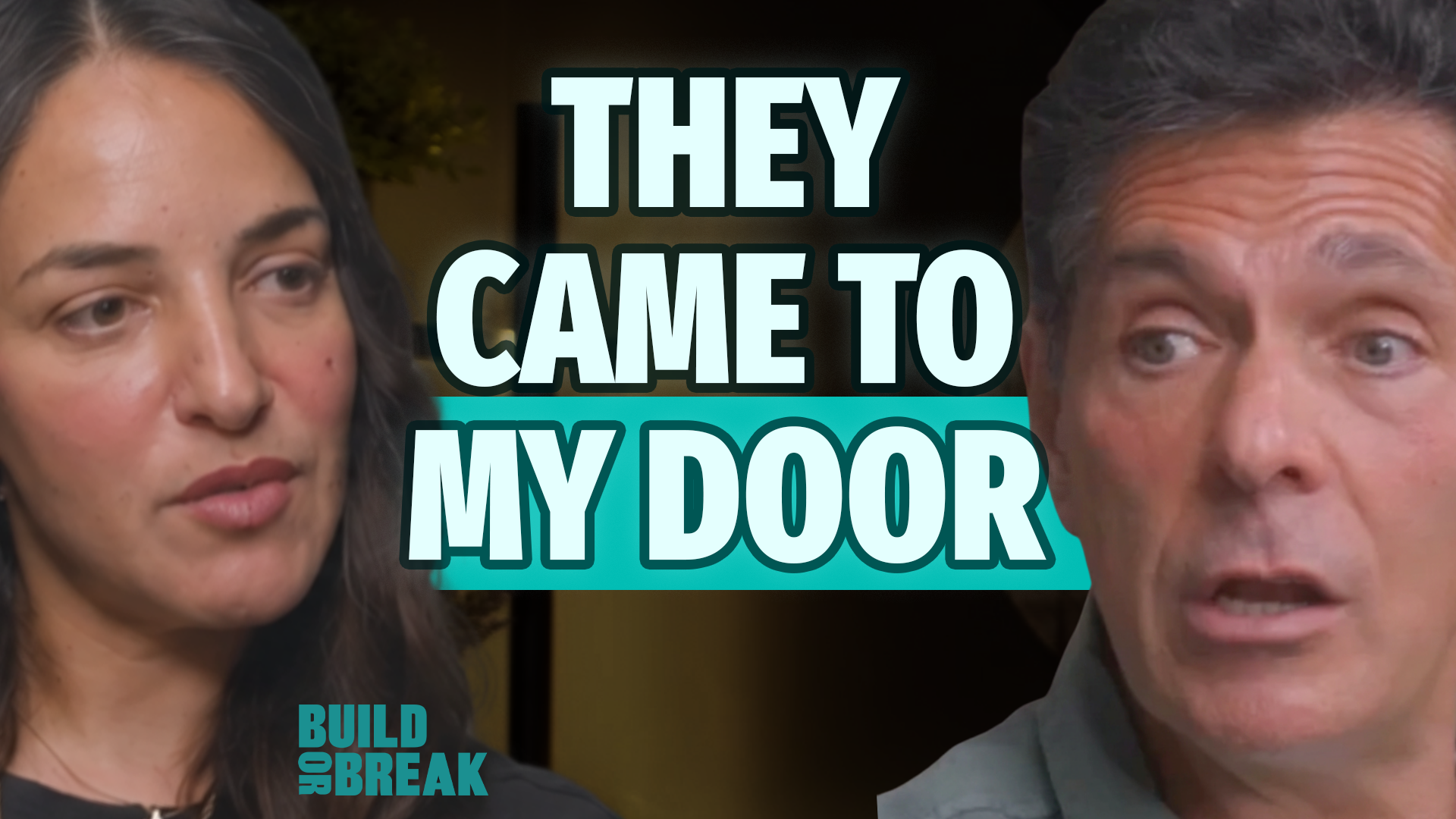
Nineteen years ago Lucy Aharish became the first Arab Muslim woman to present the news in Hebrew on mainstream Israeli television. On the seventh episode of Build or Break, Daniel Lubetzky's weekly entrepreneurship podcast, she tells him how she got there, and what it has cost her to stay: a terror attack she survived at five and a half, a best friend who wrote "Lucy, filthy Arab" on the school wall, a firing, a prime minister's campaign video, and seventeen men outside her apartment door.
Her parents came from Nazareth. Fifty-three years ago they moved to Eilat, gave up after a year, and on the drive back stopped in Dimona, where a job offer turned one or two years into a lifetime. Lucy grew up as the only Muslim kid in her school, dressed as Queen Esther every Purim, and wore blue and white on Independence Day. The night before first grade her mother sat her down and told her that no matter what anyone called her, she was Israeli, she was Muslim, and she should be proud of it. The next morning, asked her name, she stood up and said: "I'm Lucy. I'm Arab. I'm Muslim. I'm Israeli and I'm proud."
The 1990s tested that. After every bus bombing she begged her parents not to send her to school, and her father, who left school in eighth grade to support his family, drove her there himself and told her she had to face reality now or never. When anti-Arab graffiti kept appearing on the walls, her principal, Meir Cohen, later Israel's welfare minister, promised to expel whoever was writing it. Lucy caught the culprit herself: her best friend. Given the choice, she refused to have her expelled. She wanted her to walk into school every day and face what she had done. Her other protector was Grandpa Menachem, the Holocaust survivor next door, who told her mother that anyone who wanted to hurt the family would have to go through him first.
She wanted to be an actress. Her father told her to study something that pays, so she studied political science and theater history, then journalism in Tel Aviv, and interned at Deutsche Welle in Germany during the Second Lebanon War. At 27 she walked into a Channel 10 screen test full of blonde, blue-eyed candidates and assumed she had no chance. Days later the CEO introduced her to the channel's owner, Ron Lauder, as the new news presenter. She explains what she thinks makes a good interviewer: empathy, endless preparation, and actually letting people finish their sentences, which she says Israeli television rarely does.
The center of the episode is October 7. Her husband, Fauda actor Tsahi Halevi, was in uniform and heading south within 40 minutes, telling her it was not a drill. Alone with their two-and-a-half-year-old son, Adam, she checked whether he would fit inside the washing machine. Then a friend in New York texted her: a family of 12 was trapped in a safe room in Kfar Aza with terrorists outside. After three unanswered messages she sent the location to Tsahi, whose team, led by one of his best friends, reached the house that evening. "The kids are with me," the friend wrote. He went on to rescue ten more families in Kfar Aza.
Aharish is just as blunt about her own government. She calls it the most extreme Israel has ever had, and in the same breath answers the question in this episode's title: is Israel a racist country? No. She explains the difference between Islam and Islamism through her mother, who had a deep faith in God and a deeper faith in good, and argues that extremists everywhere use the freedoms of democracy to destroy it. She also describes the cost of saying so: a 20-second clip of her saying "inshallah" ended up in Benjamin Netanyahu's first campaign video, protesters gathered outside her building every day for almost three weeks, and she is now suing the people who call her a terrorist online.
It ends lighter. In the Mexican Inquisition she picks her old principal over her journalism professor, Christiane Amanpour over Tony Dokoupil, and Muhammad Ali over Nelson Mandela, and says what drives her is a sense of justice and her son. In the rapid-fire round she votes to break citizen journalism and explains how singing Hava Nagila at an audition got her into World War Z, credited as "Palestinian girl with hijab number 100."
Key takeaways
- Identity is a choice you say out loud. The night before first grade her mother told her she was Israeli, Muslim, and proud. She stood up the next day and said exactly that, and she has refused to apologize for any part of it since.
- Accountability beats expulsion. When she caught her best friend writing "Lucy, filthy Arab" on the wall, she turned down the principal's offer to expel her and asked that she face Lucy every day instead. Daniel connects it to a wider point: schools that remove kids instead of making them solve problems raise adults who can't.
- "We don't mean you" is still racism. Classmates who called for killing Arabs after every terror attack would tell her she and her family were different. She explains why being the exception is not a compliment.
- One person reaching out can shape a life. Her principal, Meir Cohen, and her Holocaust-survivor neighbor, Grandpa Menachem, stood up for her family when others didn't. She calls Menachem's protection her heritage.
- On October 7 a text message saved a family. A family of 12 in a Kfar Aza safe room reached her through a friend in New York. Her husband Tsahi Halevi's reserve team reached them that evening, and the team leader went on to save ten more families.
- You can love your country and criticize your government. She calls the current government the most extreme Israel has known, and answers no when asked whether Israel is a racist country.
- Extremists use democracy to destroy democracy. Her explanation of Islam versus Islamism starts with her mother's faith in good over ritual, and ends with why extremists depend on keeping people uneducated.
Chapters
00:00 — Intro
01:58 — From Nazareth to Dimona
07:42 — Being the only Muslim in school
11:34 — "I have a complex identity"
15:55 — The '90s terror wave
19:09 — The graffiti, the principal, and Grandpa Menachem
24:10 — "She was my best friend"
31:33 — Criticizing her government and Hamas
39:41 — "Is Israel a racist country?"
47:13 — What makes a great interviewer
51:08 — October 7: "This is not a drill"
1:05:57 — Lucy vs. Netanyahu, and the mob at her door
1:12:06 — The Mexican Inquisition
1:19:47 — Build or Break rapid-fire
Common questions
What is Build or Break?
Build or Break is a weekly entrepreneurship podcast hosted by Daniel Lubetzky, the founder of KIND Snacks and a Shark Tank investor. He talks with builders, from founders to journalists, athletes and public figures, about the setbacks that shaped them. New episodes come out every Tuesday on YouTube, Spotify and Apple Podcasts.
Who is Lucy Aharish's husband?
Her husband is Tsahi Halevi, the Israeli actor known for the first two seasons of Fauda, who also serves in the reserves. On October 7 he put on his uniform and headed south within 40 minutes, and his team rescued a family of 12 from a safe room in Kfar Aza after Lucy sent him their location. They have a son, Adam.
What religion is Lucy Aharish?
Lucy Aharish is Muslim. She describes herself as Israeli, Muslim, Arab, and proud, a sentence her mother taught her the night before first grade. She grew up the only Muslim kid in her school in Dimona, fasted on Ramadan, celebrated Jewish holidays with her neighbors, and is raising an interfaith family with her Jewish husband.
What did Lucy Aharish do on October 7?
A friend in New York texted her that a family of 12 was trapped in a safe room in Kfar Aza with terrorists outside. After three people she contacted could not help, she sent the location to her husband, Tsahi Halevi, whose reserve team reached the house that evening. The team leader went on to rescue ten more families in Kfar Aza.
Was Lucy Aharish in World War Z?
Yes. She has a small part in World War Z and is credited as "Palestinian girl with hijab number 100." She says she got it by singing Hava Nagila at an audition in Israel, and the scene was filmed in Malta.
About Lucy Aharish
Lucy Aharish is an Israeli journalist and television presenter. Born and raised in Dimona to a Muslim family from Nazareth, she studied political science, theater, and journalism, and in her late twenties became the first Arab Muslim woman to present the news in Hebrew on mainstream Israeli television, at Channel 10. She has since worked across Israel's major channels, co-founded the crowdfunded independent outlet Democrat TV with Yaya Fink, and appeared in World War Z. She is married to Fauda actor Tsahi Halevi, and they have a son, Adam.
Lucy: When I was five and a half years old, I went through a terror attack in the Gaza Strip. I used to beg my parents not to go to school. There were graffitis on the wall. Lucy filthy Arab, get out of here. We don't want Arabs in our school. And I silently sneaked into the bathroom and I saw her. Who
Daniel: Did
Lucy: It? She was my best friend.
Daniel: Wow. On October 7th, the terrorist had breached through in the south.
Lucy: I hear booms. I hear booms. I hear missiles. There are missiles above my head. And I looked up and I saw Tsahi with his military uniform. And I told him, "Where the do you think you're going?" And he looked at me and he told me, "Lucy, this is not a drill. This is the real thing." I started looking up for a place to hide Adam.
Daniel: Your baby.
Lucy: Yeah. And I remember literally opening the washing machine to see if I'm able to put Adam in it.
Daniel: Build or Break breaking news. Build or Break breaking news. We go now to the anchor desk where tonight's lead story is our guest. 19 years ago, she broke a barrier, the first Arab Muslim woman to read the news in Hebrew on mainstream Israeli television. She's interviewed a Hamas official, a sitting president, and this year a mob outside her own apartment. On October 7th, she helped direct rescuers to families trapped in their homes. But this year she had security had to protect her own family. Lucy Aharish live right here, right now on Build or Break. How did I do?
Lucy: Perfect.
Daniel: Lucy, I am so happy to be with you. Let's start by clarifying to our audience because we have a global audience, a US audience. You guys are in for something very special and what you might not understand, and this is like an iconic person in Israel and the Middle East. Can you please just please brag? Don't be very one second. I can brag. Tell us a little bit about yourself because the audience might not know who you are and then we're going to go deep and explore a lot of items.
Lucy: Wow. I will try to summarize it in few sentences. My parents are originally from Nazareth. 53 years ago, they decided to move to Eilat. They decided to leave the tribal family in Nazareth. My father, he understood that he doesn't want to raise his family in the Arab community because he wants to break barriers and he wants to go out and maybe give other opportunities to his family.
Daniel: That is in the southernmost point of Israel.
Lucy: Yes, exactly.
Daniel: Very hot.
Lucy: Then after one year, they understood that they're actually basically spending their money and they decided that they're going back to Nazareth. On the way back, they stopped in Dimona, which is a very small town in the south of Israel that according to foreign press, we have a certain facility there that we're not allowed to speak here.
Daniel: Potentially nuclear weapons.
Lucy: You said it. And they made a stop there because my uncles used to work in construction in Dimona. And there was a guy there asked my father, "What are you doing?" He told him, "Actually, I'm on my way back to go back to Nazareth." "Oh, really? What do you do? Oh, I do some stuff with. I have a job opportunity for you. What do you think? "And he looked at my mom and my mom told him, I don't know. He said to my mom," Maybe for one year, two years, one year, two year, became 53 years in Dimona.
Daniel: "To understand to the audience, Nazareth is the homeland of Jesus, but a very Arab town, a Muslim and small Christian community. And then further south in Dimona, it's the middle of nowhere. It's the desert. All you see is a hot sand.
Lucy: And one Muslim family among a Jewish community. I always say that when I arrived to Channel 10 at the beginning of my career, one of the anchors on Channel 10 told me," Wow, Lucy, you're Arab, you're Muslim, you're a woman, you're coming from the periphery of Israel. "It's like you are the all don't do in one person. It's like the only thing that is left that you will be a lesbian and that's it. So until a certain time I
Daniel: Thought - Are we going to break new news?
Lucy: She
Daniel: Happens to be married to one of the hottest guys on earth and loves Tsahi. We'll get to that in a minute.
Lucy: But at a certain point, my mom, when I didn't get married and didn't have any boyfriend or anything, she thought that maybe I'm a lesbian. But no, I'm not. And that's it. 53 years I
Daniel: Was born and
Lucy: Raised in Dimona.
Daniel: I want to go back to two pieces about your dad. What made him have the courage to recognize I want to get out of my community and explore and open the horizons for my kids?
Lucy: Because my dad lost his father when he was in the eighth grade. His father died when he was just 38 years old because of asthma. He had to leave school and help his mom, raising more, I think seven more kids. Yeah. And he started working and most of the places that he were working were in the kibbutzim next to Nazareth. He worked with the Jewish community. He worked with the Jewish population a lot when he grew up.
Daniel: Was he doing agriculture? What was his?
Lucy: No, he was doing, we say construction and helping because he didn't go to school. He didn't go to academy, of course. It wasn't something that he even dreamt about. This is why for my father, it was very important that we will go to university, we will get education. So for my father, he worked throughout his life. So when he got married, he understood, he saw the opportunities that were outside that were in the Jewish community, that weren't in the Arab society, that weren't in the Arab community. He wanted to break from the family seed and he wanted to actually try to build his own family.
Daniel: He married a Muslim woman.
Lucy: Yeah.
Daniel: You married an Israeli Jewish guy. Does he think I fucked up? I should have kept her in Nazareth or is he happy
Lucy: What you achieved? I think for a period of time they said to themselves, my mom and dad, maybe we made a mistake. It was very difficult to raise three daughters in a Jewish community when all your friends are going out for their first date and they're experiencing their first kiss. And you are not. You are not because -
Daniel: You were keeping your tradition at
Lucy: That point. Yeah, because you cannot do anything before you're getting married, anything. You cannot have a boyfriend. You cannot go out on date. You cannot experience the
Daniel: Basic - How old were you when you kissed that
Lucy: Boy? When I kissed the boy, it
Daniel: Was
Lucy: 19.
Daniel: 19.
Lucy: It was 19
Daniel: The first time. Muslims.
Lucy: Jewish.
Daniel: Jewish?
Lucy: Yeah.
Daniel: Not Tsahi.
Lucy: No, not Tsahi. Now Tsahi will ask me, who was it? Who was it? Were you in Di
Daniel: mona or you somewhere
Lucy: Else? I was in Dimona. Yeah.
Daniel: And so I read about you when you were a kid. The two things that I read that I found very fascinating. One of them is that when you were a kid in Purim, which is a Jewish tradition, it's kind of like the Jewish version of Halloween, but with a deeper meaning connected to history, you would dress like Eestera Malca, like the Queen Esther. Every single
Lucy: Year.
Daniel: And then even when there was Independence Day, you would wear blue and white. So they were making you be proudly Israeli. And in spite of that, one kid called you -
Lucy: Filthier.
Daniel: Lucy the Filthiera.
Lucy: Yeah.
Daniel: There were a couple of very interesting things for me about that incident. One is how you reacted,
Lucy: Or
Daniel: Both of them how you reacted.
Lucy: For my parents, I see you getting emotional about that because me being Israeli, it was something that is obvious for me throughout my life. I never questioned me being Israeli. I celebrated Jewish holidays in school. I remember fighting with my mom. Every single year I wanted to dress up like Esther or Queen Esther. At a certain point, my mom came and said, "Okay, maybe we'll - Mix
Daniel: It up.
Lucy: Mix it up. Maybe you will dress up like a Japanese. Maybe, I don't know, a clown, something." And I remember telling him, no, I want to be Queen Esther. And I remember that in one of the interviews, the interviewer asked me, "You know, it's Queen Esther. It's a symbol of the Jewish people." And I told him, okay, where are you going with that? "No, it's the Greeks fighting the Persians, fighting the. "And I told him," No, I was a kid and I wanted to be a queen.
Daniel: "Let me tell you a funny story that you remember. It has nothing to do with, but I have to tell you this story. When we were living in New York City, our kids were at a school, Dalton was hyper progressive. And one day they asked us to host the parents for, with you bringing all the committees, it was like 60 parents in our apartment and the kids say," We're going to do a little show. "So we're like," Okay. "So they start doing this show and out comes Jonah, one of our boys, and he starts saying in their show that he's wearing all white and he says," I am the scourge of earth. I am the antihero. I'm the villain, the greatest threat to humanity. I have done the worst. "His brothers were the heroes, he was antiheroes like," I am going to destroy and vanquish humanity. I am white man. "And all the people, the parents are like," Yeah, you going. "Because a lot of them were black people and progressive people. "Yeah, you tell them that." And we asked them, Jonah, where did this conference like, "What do you mean I was drink white? I was white." So for you, Queen Esther was just like, she was the pretty queen.
Lucy: Yeah, she was the pretty queen because there was Vashti and there was Esther and somebody told me that Vesti was ugly. So she just kept me with. But for me, the Jewish tradition was always part of my culture. Yes, I fasted also Ramadan. I also celebrated but I also went to look for the Afikoman in E Esera with my neighbors because there was the chair that was waiting for another granddaughter, which was me. And for me, that was my life.
Daniel: Just to stay a couple more minutes on the issues of identity, you probably managed to piss off everybody, right? Because the Muslim community is like, "What the hell is this girl celebrating some Jeish stuff and marrying a Jewish guy?" And in the Jewish community, some of them were like, "Why is she intermarrying?" So you're just a rebel with a cause. Tell us a little bit more about how do you deal with every single day with your identity? You have one son now?
Lucy: One son.
Daniel: One son. How are you raising him? How do you think about these issues? What do you see about what's important in society to preserve some of your traditions, to build bridges? How do you think about that stuff? Or is it just like, again, I just wanted to be the pretty girl and I don't think about
Lucy: This? No. I remember that I had a conversation with a guy that I met a few years ago and he told me, "Aren't you tired?" And I told him about what? And he told me about getting up in the morning and every single morning is a fight. And I told him, "You see it as a fight. This is my life. I am not used to anything else. I'm getting up in the morning and this is me. This is my identity. I have a complex identity. I am Israeli. I am Muslim. I am Arab. I'm a woman. I'm a Muslim Arab woman. It's Israeli. It's complex." And I think that the complexity of my identities brought me to a point where I am able to actually look at the entire picture in a way that other people can't. For me as a kid, when I was five and a half years old, I went through a terror attack in the Gaza Strip by Hamas militant. So for me, the 7th of October was very obvious. When I heard people denying the 7th of October, I said to myself, I'm sorry for my
Daniel: Language. Explain for me in case people don't know, because they might not know what do you mean when you said 7th of October.
Lucy: 7th of October, the biggest massacre that happened to the Jewish people since the Holocaust.
Daniel: And to Israelis. And to Israelis. It's interesting. In your way you talk, you're always building bridges and acknowledging -
Lucy: The Jewish.
Daniel: The Jewish people. But for me, I think about October 7th thinking not just about the Jewish people, but the fact that Awat Daraushe, the cousin of my co-founder of the War Boys Muhammad Rashe was murdered as a nurse tending to the Jewish victims of the Nova Festival. And he thought, "I'm going to stay here because I'm Muslim. They're not going to kill me." And they killed him. And
Lucy: They killed him. I acknowledged the fact that when Hamas militants entered Israel, the purpose was to kill Jews. They also wanted to kill Israelis, but the purpose was to kill Jews. When I saw this video, one of the videos that they stopped a guy from East Jerusalem and he told them, ".
Daniel: I'm from Jerusalem.
Lucy: I'm from Jerusalem. I'm an Arab. I'm Muslim." "Ah, you're Amir, you're cooperating with Israel. "And they shot him in the head. So when I saw a few days after October 7th that people are denying what happened here as a victim of terror that went through a terror attack and almost lost all my family, my entire family when I was five and a half years old, seeing my cousin going into flames, the images on October 7th took me right back to being five and a half years old. So hearing people denying it on 2026 or 2023 back then, it drove me crazy.
Daniel: How did you become so strong? You take it for granted, but you have an extraordinary strength to fight against extremism on all sides. What drives you? Is it that you see things that others don't see and you want people to learn that stuff? Is it building bridges? What makes you, or were you just born a strong motherfucker? As a little kid, when you were a little kid, were you the girl that stood up to that or what was inside you?
Lucy: I was the kid that throughout her life, there were people that reached out to me. I was the only Muslim kid in school. Throughout the '90s, it was a nightmare because the '90s was another period of time that Israel experienced with the worst terror attacks that Israel ever experienced until that point. Buses blowing up, terrorists with suicide terrorists blowing out themselves in the middle of Tel Aviv and Jewish towns and Israeli towns. And every single day that I went to school, the day after a terror attack, I used to get into school. And I remember that before I went out of my house, I remember that I used to beg my parents not to go to school that day. And my parents, I remember my dad every single day going to work at six o'clock in the morning. He used to postpone his exit and take me to school. And just before I was leaving the car, he looked at me and he told me, "You will go out and you will face reality because if you won't be able to face it now, you won't be able to face it in the future." And I used to go out and get in and I saw my best friends screaming, "The day of a terror attack, you're angry. You want revenge because you cannot understand the evil in this act, in this terrorist act." And I used to see my best friends, "Death to Arabs. We need to kill them. We need to murder them all." And they used to look at me and they tell me, "Well, Lucy, we don't mean you. Well, you and your family are okay, but the rest of the Muslims and the Arabs, we need to kill them. We need to murder them all." And back then I used to say to myself, "Wow." When people used to tell me, "Oh, I wish that all the Arabs were like you or all the Muslims were like you." I used to say to myself, "Wow, you wish that all the Muslims were like me. We have two million Arabs living in Israel. You wish that all of them were like me. We have 350 million Muslims living in the Middle East. You wish that all of them were like me. We have one and a half billion Muslims living in the world. You wish that all of them were like me? Wow, I am amazing." But when you look at this small sentence, you realize how much racism there is in one small sentence. Because try to imagine that somebody is coming to a Jewish man or a Jewish woman and telling them in the United States, "I wish that all the Jewish people were like you. You're not trying to control the media." We don't mean you. Yeah. We don't mean you, but you Jewish people are control. You're controlling the media. But
Daniel: Something, you and
Lucy: I - And I started telling you that In a lot of stations in my life, I had somebody that reached out to me because in school it was the principal of the school because at a certain point there were graffitis on the wall, loosey filthy Arab, get out of here. We don't want Arabs in our school. And my principal, which is Meir Cohen, he used to be the minister of welfare in Israel. And Meir used to gather the entire class and tell them it won't happen. The day that I will understand who is the person who's writing these things on the wall, he will be expended. And on the other side, my neighbor, the one that I told you that I had a chair every his name was Grandpa Menachem. Grandpa Menachem. I never knew my grandfathers. I always tell this story because this story is basically the story that build me, that made me understand the narrative of the Jewish people and the narrative of Arabs, Muslims, Israelis living in Israel. I never knew my grandfathers. They died before I was born, but my grandpa Menachem was our neighbor and he never missed a single birthday. He never missed a single event that I had in my life. And my grandpa Menachem had a number on his hand. And I remember asking my mom always, "What is this number?" And she told me, "We don't ask. If he wants, he will tell us." And one day in the Gulf War, he came and he told us his story, how he and his sister were the only survivors of tens of people that the Nazis sent to concentration camps. And it was my grandpa Menachem that when we got death threats in Dimona from the Kahane party, the extreme right Kahane party telling us to leave Dimona, my mom used to take these letters and take them to Menachem. And he told her, I remember him looking at her with his blue, beautiful eyes. He was a beautiful man. And he looked at her and he told her, "I didn't go through everything that I went through. I didn't raise up a family. I didn't get up from the dead. So somebody will ever do anything to you in this land. They will have to go through me to get to you." So when my life, when my grandfather, Menachem, was protecting me and my family against extreme ideas, I feel that this is my heritage.
Daniel: I want to encapsulate a little bit what you said, because by the way, I don't know if you know that my father also was a Holocaust survivor and he had a very similar way to yours of building bridges. And my role is to try to prevent what happened to him, like Menachem said, from happening again to any other human being, whether it's Jewish or Muslim or anybody else. But just what you just told the story that summarizes exactly what's going on, extremists that deny the humanity of the other, they're actually very smart. They're trying to divide us and terrors apart. And their goal of the terrorists, they're actually, why did they perpetrate so much atrocity in October 7th, not just to kill, but to dismember and disembowel and engage in sexual violence, which I know you also marched against, because they wanted to divide and inspire Ira and divide because if they divide, then they prevent us from building together. And you stood against it because of your father's example, because what he taught you, and because people reached out and the power of people reaching out, particularly when others don't, it's just so incredible in how it to some degree forged you. I want to go back for a second to when you're being called dirty, filthy Arab or Lucy's a filthy Arab, and you not only managed to become who you are, to not to transcend that, but I read that you didn't want that kid expelled, that they offered you. Sorry, my Mexican Jew. I get too emotional too easily. They offered you to expel that kid and you said, "No, I don't want them to expel that kid." And for me, that is a very interesting story. Maybe you can explain to us what you were thinking because I had lose my own thoughts.
Lucy: She was my best friend.
Daniel: Wow.
Lucy: And for -
Daniel: Your best friend said that. My
Lucy: Best friend.
Daniel: So everybody's complex.
Lucy: Yeah.
Daniel: Even your best friend can make a mistake.
Lucy: Definitely. And I don't think that today, I don't think that it came from racism. I think that it came from maybe envy, maybe her way she had difficult life too. And I remember that I found, I saw her doing it. It was my mom always throughout that period, my mom always told me, "It's very strange that your friend is the one who's discovering all these graffitis and she's the one who's telling you, come and see these graffiti. Somebody wrote something on the wall." And I remember fighting with my mom and telling her, "No way. She's my best friend. How dare you think that about my best friend? But your mom said something and it's here." And I remember a few days after we had a test in class and she finished the test and she begged to go out to the bathroom. And when she was about to leave, I saw, because I was an investigative reporter back then, even then, I saw her going out with a thick pen, a thick marker. And she went out. I finished the exam right after her, and I asked my teacher for permission to go out. He thought that I'm going after her because we were best friends. And I remember going out of the class and walking down the hall, and there was one step at the end of the hall going into the bathroom. And I went in and I just silently sneaked into the bathroom and I saw her writing Lucy -
Daniel: You broke your heart.
Lucy: Filthy Arab. And I looked at her, she looked at me. I didn't say anything. I went back to class and I didn't say anything for weeks. I just stopped talking to her. I stopped speaking with her. And nobody understood how come these two that were unseparable, they are not friends anymore. And a few weeks after, the vice principal came and told me, "Lucy, I have some good news and I have some bad news." And he told me, "We discovered who is the person who's writing these things on the walls." And he told me, "This is the good news." I told him, "And the bad news is that you know that it's my best friend." And he took me to Meir's room and Meir told me, "What do you want me to do with her? Just say. If you want me to kick her out, if you want me to take her out of school, just say it." And I told him, no, I don't want you to kick her out of school. I want her every day to get into school and to see my face and to face what she did.
Daniel: For me, that story not only says a lot about you, but also about the way things need to be done because I was literally having a conversation yesterday with somebody and we do a lot of work with builders for schools. And one of the things that I've learned is that we've removed agency from people and trying to prevent bullying. We expel the kids rather than make them face each other and solve problems together. And then they show up in college and a lot of the college program tells these young people do not know how to solve problems because they've been helicopter parenting and helicoptering administrations that just take all these decisions away from us. And you had the agency and forced the agency on your friend to deal with that stuff. I also read once about how you described your journey as not being a victim, which is I think it's just so important, this framework of victim versus oppressors, just the stupidest framework in society because then if you're a victim, you have no agency, you have no protagonism. If you're an oppressor, no matter what you do, you're going to be. And for me, the framework that makes sense is builders versus discharge because you have agency. You can choose to wake up in the morning and deny the humanity of others and divide, demolish, and diminish or to wake up in the morning and try to build together, elevate society and unite and work to make this a better world. And tell us a little bit about how that came to you. Was it natural or.
Lucy: After I went through the terror attack, I hated Palestinians. As five and a half years old, I remember the screaming of my father right after the car exploded. I remember the screaming of my father telling people, looking at people around us and telling people, "Please help us. We're Arabs like you," and nobody reached out. And for a period of time, I asked myself, "How come they're killing people who speak their. What did we do to them?" So I hated them. I hated them. And I said it out loud as a kid, "We need to kill the Palestinians. We need to murder them." And my extended family came at a certain point and said to my father, "Your daughter hates herself. She hates who we are. She's developing some safe self-hatred." Who said this? The extended family. She's developing some self-hatred. And my father, my very smart father said to them, "When she will grow up, she will understand that life is a little bit more complicated than she thinks." And the day before I went to the first grade, my mom sat me down for a conversation. And she told me, "The day before you're going to the first grade, the only thing that you think is, okay, I'm going today, it's tomorrow for school. First time that I'm going to school." And my mom looked at me and she told me, "Lucy, no matter what people tell you, no matter how much people will curse you, no matter how much you will be bullied or beaten up, you are Israeli, you're Muslim, and you are proud of it." Now, this is a huge conversation for five and a half years old. It's like the only thing that you say to yourself, "Okay, okay, what am I going to wear tomorrow?" It's like, what is this Israeli and Muslim and proud? And like I told you, when your mom said something, it stays with you. So the next day when I went to school, I stood up and the teacher asked everybody, "What's your name? What's your name?" Yes, I'm Lucy. I'm Arab. I'm Muslim. I'm Israeli and I'm proud. And I remember the teacher looking at me with this look. She's, okay, I know who's going to make some trouble this year. But that sentence went with me for not apologizing of who I am. I'm Israeli, I'm Muslim, I'm Arab, and I'm proud of it. I'm not apologizing for any of my identities. Yes, it's complex. Yes, I have a lot of criticism about what is becoming from the Israeli society, what is happening in the Israeli society about racism in the Israeli society. I have a lot of criticism about the Palestinian leadership. I have a lot of criticism about terror organization using their own people basically to their own benefits because what Jeremar did is basically using the Palestinian people in the Gaza Strip for his own theological, extreme jihadist ideas, not even looking at the people of the Gaza Strip. Because when you commit such huge atrocities, when you come with this evil and you commit these crimes, you know that the reaction is going to be fatal. You know that the other side is not going to sit down and tell you, "Oh, let's have a coffee. You just murdered 1200 of our people, you burned them to death, you raped them. Let's have a conversation."
Daniel: He was the evil, but he was very,
Lucy: He
Daniel: Knew exactly very clever. He knew exactly
Lucy: What
Daniel: He's doing. And his goal was this absolutist. He didn't want to point peace between Israels and Palestinians. He didn't want to build a Palestinian state in peace or not peace with Israel. He had this ideological belief of Uma to deny Israel Israel. Daniel,
Lucy: The thing that drove me crazy, it was I think one month after the massacre, after October 7th, I saw an interview of Mousa Abu Marzouk, the spokesman of Hamas, sitting in RT in front of the interviewer. And the interviewer is asking him, "Why the tunnels are not a place that the people of Gaza can hide in? Why you're not hiding the people of Gaza from the Israeli airstrikes and the tunnels?" And he sat there so full of himself saying, "The tunnels are not intended for the people of Gaza. They are for the fighters of Hamas. The people of Gaza are under of the responsibility of the UN." This is the spokesman of the Hamas organization that people right now in the United States march down the streets and say they are freedom fighters. They sacrifice their own people. Saying it out loud, they said it with their own words. We are sacrificing our people. And for what? So that you will be able to sit down in fancy hotels in Abu Dhabi, in Dubai, in Qatar, in whatever you are, taking away your own family, saving them while the people of Gaza are actually paying for the consequences of your own actions that you brought on the heads of the people of the Gaza Strip?
Daniel: Can I ask you to explain because for our audience, they might be a little bit lost in understanding how. I'm sorry to ask this very important question. You're very proud of your Israeli identity and of being a Muslim Arab woman and you condemn Islamism and not everybody might understand the difference between how you see your faith and how others on the extremist are, just like that exist in all areas extremists take into this absolutist vision of Islamism. Could you just explain that a little bit more for the audience?
Lucy: I think in every religion you have seculars and you have religious people. I always give the example that my mom was always. The extended family always came to my mom and had a criticism about her because she's not wearing hijab. And my mom has a deep faith in God, but a deeper faith in good. And she used to see what people are doing in the name of religion. She used to see how people are praying five times a day and basically being disgusting to one another.
Daniel: Which happens in the Jewish tradition too. In every
Lucy: Religion.
Daniel: I'm sorry to interrupt, this is so important, but this is really important. When I was mourning my father and I couldn't really relate to prayer that much, my rabbi asked me to read Pirkei Avot, which is like the precepts of our fathers. And what was interesting, and I just read it because I did a podcast on Pirkei Avot that I was asked to comment and I reread it and the rabbis themselves tell you, do not just pray, do not do all about prayer because then you're not a good human. You need to work and you need to meet people and what matters the most in religion is this, what your mom taught you about the good rather than about just the word of the Bible because a lot of people become very self-righteous and get lost in the ultimate essence of what it should be.
Lucy: My mom used to say, "I am not hiding anything. God sees every single thing that I'm doing. What I see is that people sometimes when they are putting a hijab, they're trying to hide their bad actions and they think that the hijab is a barrier between them and the eyes of God. The
Daniel: Hijab - That was a very good joke, but I'm going to tell it to you later. I have to remember to tell it to you later.
Lucy: I think that religion is a beautiful thing. I think that in Islam and Judaism in Christianity, there are beautiful human things, but what human beings are doing and putting their ideas, their extreme ideas or the way that they think and taking it and giving it another perspective, this is what brought that extreme Islam will rise. And not only it's rising, it's also, I think when it's flourishing the lack of education. This is why extremists don't want their people to be educated because when you are educated, you are asking questions, you are putting question marks, you are challenging yourself, you are not taking things for granted. And extremists, I see this throughout history, what extremists did was basically using the morals of democracy to destroy democracy. This is what extremists are doing. This is basically what is happening also in Israel. Extremist ideas are using the Israeli democracy to try and demolish it. Like I told you, I'm a very, very, very proud Israeli, but it doesn't mean that I'm not criticizing my current government.
Daniel: The opposite. It means that you have the courage to say whatever you feel that you need to say.
Lucy: And it doesn't mean that I agree with my government is doing, with the actions of this extreme government. And I say it out loud, we have the most extreme government that Israel ever knew and racist government that Israel ever knew. I'm saying it out loud. Is Israel a racist country? No.
Daniel: But I want to actually. I have so many more questions I want to ask you, but I want to pivot a little bit to your journey and your career with that story because the way you and I met, if memory serves me right, because maybe we had met before, but what I remember is that you were, I think, on channel one or 11.
Lucy: Channel
Daniel: 11. And you had the courage to speak up and within three days you got fired.
Lucy: I didn't speak out. I went for a demonstration and I anchored a demonstration that was throughout the COVID when we weren't able to go out. And I actually anchored a demonstration that was filmed in a studio. It was the first online demonstration. And I spoke in this demonstration and the demonstration title was Fighting for Democracy, Fighting for Our Home. I remember two minutes before I went to the demonstration, my agent called me and she told me, "Lucy, come on. Until we found you a job, why are you going to like this demonstration? Why are you going to speak?" I said, "You know what? Just because you told me now this sentence that you have a question mark on the sentence because you're saying that if I will go right now to this demonstration, I might lose this job. You're basically kicking me out of my house to go to this demonstration."
Daniel: That fire that you have inside you to always search, to have the courage and the backbone, it's easier said than done to have that. Where did that come from besides your parents and your journey? Why did you decide to become a journalist? Why did you decide to search for the two? I
Lucy: Wanted to be an actress. I really wanted to be an actress.
Daniel: Well, you were in one movie with Brad Pitt. We'll get to that in a minute.
Lucy: Palestinian girl with hijab number 100. If you will look in the. That was my title. I don't think that Brad Pitt even know that I was going to be - I will connect you to him. But I wanted to be an actress and I graduated in a theater class and my teacher wanted me to go to theater school, to acting school. And I came to my dad and I told him, "Dad, I want to go and study acting in acting school." And he told me, "You go and you study something that you can earn money from, and then you do anything that you want with your hobbies or whatever and the stuff that you're doing." And I did. I went and studied political science, and at the beginning I studied political science and studies of the theater, which is the history of theater. And when people asked me, "Wow, what a weird combination." I said, "Of course. In order to be a good politician, you need to be a good actor. This is what we're seeing right now." Then I studied two more years of journalism. I understood -
Daniel: When did you first feel that you might go in that journey as a journalist?
Lucy: When I watched a show on Israeli Channel two, Hama Galsher Dan Chilon, the circle of Dan Shilon. He used to interview a lot of people in one circle, like very interesting figures in Israeli society. It used to be politicians and people, actors, singers, whatever, and some people that have interesting story. And I said to myself, I said, "I have an interesting story to tell him. I need to sit down in this circle, and one day I will." You debut. Yeah.
Daniel: You wanted to be the subject. I
Lucy: Wanted to be the subject because I knew -
Daniel: You had an incredible story. That
Lucy: I have a story to tell, and this story needs to go out.
Daniel: But how did that pivot to your own perspective? I fell in love with it.
Lucy: I finished
Daniel: Journalism. You started as a journalist?
Lucy: Yeah. I studied journalism in journalism school in Tel Aviv, and then I did my six months internship in Germany. It was during the second Lebanon War. And I came back, studied German. I did my internship in the Deutsche Villa radio and TV, and for a few days also in Seda If. And I came back and I started immediately working in. And after a few weeks, there were some screen tests of news presenters in Channel 10.
Daniel: How old were you then?
Lucy: 27. I remember entering the room and everybody were blonde there with blue eyes. Is there no chance that they will take me. A few days after, I was called by the CEO and he asked me for a meeting. I remember getting there and I sat with the CEO and the owner of Channel 10 back then was Ron Lauder.
Daniel: My
Lucy: Friend. I was talking with the CEO and Ron came and he asked me, "I see your CV. You don't have any CV, but what's the story? I heard you're Arab. I heard that you're Arab, you're Muslim." I told him, "That's the story." Ron Lauder just came and he told him, "Oh, Hon, meet. She's our new news presenter on Channel 10. She's the CEO to Ron Lauder."
Daniel: He had chosen that already at
Lucy: That point. He just basically told me that I got the job by saying it to Ron Lauder. "Meet, this is Lucy Aharish. She is Arab, she is Muslim, and she's our new news presenter in Channel 10." And I was like, "Oh, so I got the job."
Daniel: But what I want to understand is who had the guts to. Because it was a historic moment with the. Am I right? You were the first Muslim Arab woman to go present- Presenting news in Arab in Hebrew on the biggest channels. Who had the vision that would be. It was a risk for them. Who did it?
Lucy: I think the one that recommended me was. He was the Arab Affair analyst in Channel 10. He was my professor. He gave me two classes in journalism school. And
Daniel: He said - And was it like you jump in and everybody's like, "Oh my God, you were very beautiful." What does it take to be a superstar in media? Was it being able to listen? Was it being able to think concretely? Was it your ability to think complexly because of all of your multiple identities? Was it the physical beauty? Was it the ability to talk to the camera? What do you think are the secrets to becoming good at your job?
Lucy: I cannot say that I am. It was easy. My journey was easy in journalism. It's like my best friend here is behind the camera. She is the biggest witness. I never had the path where I can say that, wow, it was on the rise all the time. I was very. It's
Daniel: Step forward, takes back, step forward step back.
Lucy: One step forward, 20 back. I think that only in the last three years I can say that I'm settled and I don't know.
Daniel: But what makes you good at your job?
Lucy: The ability to put myself in somebody else's shoes.
Daniel: So empathy and emotional intelligence.
Lucy: Yeah. And I think to listen.
Daniel: We were talking before we started such a harder skill than I realized. When I started doing this, I've learned so much and I respect people like you because holy shit, it's a much more complex - First of all, it's knowledge. It's not easy to listen.
Lucy: Knowledge, knowledge, knowledge, knowledge. I always learn, study, analyze, listen.
Daniel: So. Being curious is important.
Lucy: Yes. Being curious and being interested in the person that you're interviewing, not to just come and actually just listen and to say you have your questions and you know what you want to ask, but actually listen. This is something that usually Israeli anchors don't have the ability to listen. In one way, unfortunately, we became the story when a journalist should not be the story. This is why my friend here always, I drive her crazy because I let people finish their sentence.
Daniel: But you have become the story. And
Lucy: Usually on Israeli TV, nobody finishes a sentence. They start with an idea that tells you, well, first thing's first and it ends with the first, not the thing, not the first, not the nothing. It just, he doesn't even get to finish the first idea. And for me, if I'm sitting at home, I'm always thinking about the viewer. I always think about just a second. He said first thing first. So what is the last thing that he. Because the viewer just listened to what he said, not to what I said. Sometimes, yes, we become the story. We become the story because it's Israel. It's a little bit different. Tell
Daniel: Us a little bit about what's going on because it's fascinating what's happened in the last few months. I mean, by the way, I want to. Actually, we'll get there in a second. I want to just say something really fun. When we met, were you already with Tsahi or that came after?
Lucy: I was already with Tsahi.
Daniel: And so Tsahi is a very famous television star. He's on the series Fauda, and in the Series Fauda he played - The first two
Lucy: Seasons.
Daniel: Okay.
Lucy: Only the first two seasons.
Daniel: Which are the good ones, by the way, honestly. But I mean, it's all good, but the first two seasons are insane. But Tsahi is in the Shabbat and on TV, and I don't think Americans can appreciate how the hell this happened, that on October 7th, he was actually a real hero. It's crazy insane. For somebody living in Mexicans, we do not relate or understand to how somebody that plays a movie star that is - In an
Lucy: Undercover
Daniel: Unit. An undercover thing. He ended up saving many lives. And you ended up helping also direct people to where they were. Can you please tell us that story?
Lucy: Wow. You never in your life think that you will be in this position. You never in your life think that the lives of people will be in your hand. That morning at two o'clock, after we understood the magnitude, we understood we started getting the images. Two o'clock. Two o'clock in the afternoon. And it started
Daniel: At 60 AM.
Lucy: It started at 6:00 AM.
Daniel: And you haven't captured what's going on till eight
Lucy: Hours later? I started capturing Tsahi immediately, 40 minutes after, was on his uniform and went to the south.
Daniel: Explain what that means, because most people might not understand what that means.
Lucy: It means that we woke up at 6:30 in the morning. Nobody understood what is happening. Nobody, not even on the news. We opened our WhatsApp group. I said to Tsahi, "There is an alarm. There is sirens. Do you hear something?"He told me, no, no way. There are sirens. I opened my phone and everybody on the WhatsApp group of Channel 13 were asking, "What is happening? What is happening? What is happening?" I hear booms. I hear booms. I hear missiles. There are missiles above my head all over Israel. On October
Daniel: 7th when the terrorists had breached through in the south.
Lucy: Exactly.
Daniel: And slightly in the center north, you're trying to figure out what
Lucy: Happened. And even when I opened the TV and there was this special edition, and even the reporters, the military reporters were not able to analyze or to explain what is happening. Nobody understood what is happening. After I think the first images of the vehicles getting to Sderot, the Toyota vehicles getting to Sderot with Hamas militants, it was the minute that all of us understood that something big is happening, that they were freely driving in Sderot looking for enter houses. So this is
Daniel: Town in the south, that's a significant town
Lucy: Near Gaza. Yeah, significant near Gaza, near Beersheba, near the next big town in the south of Israel. And that was the moment that we understood that something was wrong. I think it took Tsahi went to his WhatsApp group of his military friends and the military units. Between one siren to another, because there were a lot of sirens that morning, I remember that I was sitting. Adam was two and a half years old.
Daniel: Your baby.
Lucy: Yeah. And I remember I was sitting in the balcony trying to understand, watching the horrible images pouring in, in the WhatsApp group coming from the kibbutzim. And I looked up and I saw Tsahi with his military uniform, and I looked at him and I told him, "Where the fuck do you think you're going?" And he looked at me and he told me, "Lucy, this is not a drill. This is the real thing."
Daniel: So in Israel, he's a movie star, but he's also serving in the reserves. Yeah. And so people, because it's a small country and under threat from a lot of its enemies, he put on the uniform to try to go help the people in the south.
Lucy: And I never ever asked Tsahi when he went to the reserves. I never asked Tsahi where you're going and I never was worried.
Daniel: Till now.
Lucy: When he went out, he told me, "I love you. Please close the door. Don't open to anyone." I told him, "Take care of yourself." When I kissed him, I didn't know if he's going to come back. I knew that maybe it's the last time that I'm going to see him, because we understood that this is not a drill. I remember I closed the door, and because I started understanding that they're starting to kidnap people and to enter people's houses, the terrorists, I started looking up for a place to hide Adam. I remember literally opening the washing machine to see if I'm able to put Adam in it. I don't think that people realize what happened that day. I don't think that people. I'm so ashamed hearing women organization, international organizations denying what happened on October 7th, denying what happened to women on October 7th. I cannot understand how so such a. The images were recorded by Hamas militants themselves. They recorded themselves killing people, murdering people. They recorded themselves doing the atrocities that they did. And yet you see people in Europe and in the United States and in Arab countries denying this, and you say to yourself how fucked up you need to be to support a terrorist organization, how fucked up you need to be. I'm sorry for my language, but how fucked up you need to be to praise Osama bin Laden after October 7th. How fucked up you need to be to be so ignorant, to see entire families.
Daniel: And that you're helping the extremists hurt everybody, not just the Israelis, but the. We've been for 30 years, as you know, trying to help build bridges and build opportunities. And as long as those terrorists are in your power, you cannot bring investments into Gaza, you cannot build jobs. Nothing. You need to defeat the extremists on all sides in order to elevate. And it's fascinating to me that a lot of people don't understand how they're actually hurting those people they pretend to be helping.
Lucy: You know how I got the message from the family in Kfar Aza? I got a message from my friend in New York. She texted me. She told me, "Lucy, a guy will send you a message. His family, there are 12 people in the safe room. When terrorists are outside their house, they're trying to reach out to police, to the ID after nobody is coming and there are tens of terrorists surrounding their house. Lucy, you need to help him."
Daniel: And what did you do?
Lucy: I look at the text and you never think that somebody will put you in this situation in your life. And I remember the guy texted me and I started sending the direction to their house, to Yair Golan, because I heard in the morning that Yair Golan helped directing some forces and he was able to reach to some people. So I sent a
Daniel: Text - Yair Golan is
Lucy: The
Daniel: Decorated General who currently is running for - The Democrat Party. Democrat Party.
Lucy: Yeah. And I sent him the location and he didn't answer me. And I sent one of my other friends and he told me, "Lucy, I'm in this big event in another kibbutz. I cannot help you." I sent it to another one and only the fourth text message was to Tsahi. I told him, "Tsahi, look at this. Try to help them." He told me, "My team is going to the south. I'm sending them the location." I was texting the people
Daniel: In the safe room. But you're asking him to risk his life even though you have your two and a half year old in your. And
Lucy: He told me, "Okay, we're on it." And he started directing his team towards the house, and the guy that was in the head of the team, one of Tsahi's best friends, that he's like my brother, texted me at five o'clock and he told me, "Lucy, I cannot reach them. I'm not getting there. I'm not able to get to them." I told him, "Okay, just do everything in your power to just take care of yourself, please." I remember that at one point at 6:30, I think, I texted the guy that I got the number from New York, that I got his number from New York, and I told him, "They're not answering me." He told me, "They're not answering me either. I don't know what happened to them. And I was sure that we failed. At eight o'clock, I think 20 to eight -
Daniel: PM.
Lucy: Yeah.
Daniel: We start at 6:00 AM in the morning.
Lucy: Yeah. Tsahi texted me and he told me he is there. And I texted his friend, the head of the team, and I told him, "Are you there?" And he wrote, "Positive. The kids are in my hand. The kids are with me." And I remember I threw the phone out of my hands and I just fell down and I started crying my heart out. And my kid came to me and he told me, "Mom, don't be sad. It's okay. You don't need to be sad. Everything will be okay." And my sister told him, "Mommy's okay. Mommy just helped save some lives. You -
Daniel: And daddy also.
Lucy: Daddy. And you know the guy, Tsahi's friend, when he entered the safe room, and the first thing that he told them was," How do you know Lucy Aharish? "And they looked at him and they went," What? What are you talking about? "And nobody understood the connection. It's like nobody understood how this -
Daniel: You have to make a movie out of this. That's crazy. And Brad Pitt needs to act as Tsahi. Who would play you?
Lucy: I always say that this is my personal post-trauma because since that day, the only scenario that is going through my mind is what would've happened if he would've entered the room and they were dead.
Daniel: Or if they killed him. Many people were killed trying to rescue people, including friends of mine, including highly decorated Israeli, Jewish and Muslim friends.
Lucy: By the way, he was injured 24 hours later.
Daniel: Tsahi?
Lucy: Tsahi's friend.
Daniel: Tsahi's friend. Is he okay?
Lucy: He's okay, yeah. By the way, because of the location that he got from me, he was able to save 10 more families in Kfar Aza.
Daniel: He your friend or Tsahi or together?
Lucy: Tsahi's friend.
Daniel: I want to ask you one last question before we pivot to something else. At the beginning of our conversation, when I was growing up as a Mexican Jew, my father made sure that I knew that it's manly to get emotional, that he didn't want me to run away from my emotions. And you can tell I do a very good job. At the beginning of our conversation, I saw a couple times you hold back when you were about to get emotional. At the end, you weren't able to. But did your dad in your culture, you as a woman felt the need to be strong and not show your tears because then others might see - Oh, no. No.
Lucy: I always cry.
Daniel: You do?
Lucy: I always
Daniel: Cry. Are you a Mexican Jew?
Lucy: I'm a Mexican Jew. I'm a total Mexican Jew. I'm always crying, always, all the time, really. It's like -
Daniel: In front of the public. In
Lucy: Front of the public.
Daniel: And does somebody see
Lucy: That as well? Basically, they're calling me the crying baby of Israeli media because I cannot hold myself. I spent, I think that the last three years, there was not even one interview that I did with the families of the hostages that I did a breakdown in tears in front of the camera. And today I think that all my tears are going through some kind of a transformation to, like I said, the frustration.
Daniel: I'm frustrated. As we wrap up this segment and go to another segment, I want to tell you that all of us that consider ourselves builders are frustrated with increasing polarization. The tool I use, and I encourage everybody to use when you're facing that, is look at who our tribe is, our tribal builders, whether Jew, Muslim, Israeli, Palestinian, the builders, they're building bridges, schools, technologies. We have an incredible group and ultimately we will prevail. The danger along the way is that people that have extremist passions, they wake up in the morning and think, "How can I advance my cause?" And most moderates wake up in the morning think, "What can I have for breakfast?"
Lucy: Why do you think Daniel was attacked in the last few months?
Daniel: Because they're threatened by you.
Lucy: Yes.
Daniel: They're threatened by what you. I absolutely noticed the groups that are the extremists are threatened by your vision to build bridges, and that's where you need to be even stronger.
Lucy: To call me a traitor, a nuchba terrorist.
Daniel: And this, you're talking about somebody from the far right - Far right coming. On the Israeli Jewish lives. You get attacked by all Israelis are evil and by the Israeli right that - The
Lucy: Israeli prime minister used, at his first video campaign, used the same video that the extreme right in Israel that came to attack me at my doorstep.
Daniel: How did that come about?
Lucy: Benjamin Netanyahu used this video in his first video campaign. And when I saw Benjamin Netanyahu using this video of the Emcha Allah, the word that I said, "If God will."
Daniel: They took out that piece.
Lucy: They took out like 20 seconds from a three minute video that I was talking about the violence in the Arab society. And I was talking about the fact that it is not being taken care of in the Israeli society, that basically the Arabs will change and Shah Allah will go the next elections to change their future by going out on buses to vote. I took basically the sentence of Benjamin Netanyahu, saying it in the elections of 2015. So he used this at his first, right now, a month ago, at his first video campaign to incite against maybe a combinant that the Arabs will take part in the next government. He used me. When I saw Benjamin Netanyahu using this word, using this sentence, using this clip, I understood that he's afraid, that they are afraid of the ideas that I put on the table. They are afraid that I am saying to Israeli Arabs, "Go out and vote."
Daniel: But it's almost like when your colleague told you don't do this, it gives you more power to go and build and to do and to have the strength. Tell us what happened as a result.
Lucy: Wow. I think that, first of all, it was an entire month, almost three weeks, that every single day I had demonstrations next to the building where I'm living. Every single day in my neighborhood, people gathered and call me filthy Arab, terrorist, whore whatever you want. Lucy, the terrorist, Lucy, the whore, Lucy.
Daniel: Going back to the Mona days.
Lucy: Yes. Going back to the Mona days every single day until one day they took it one step further and they came, 17 men stood in front of my doorstep. They went up. I live in the 16th floor. They went up and they stood in front of my doorstep and they were asking me, screaming outside the door, "Get out. We want to speak with you in the name of Arafat. We want to speak with you in the name of Rabin."
Daniel: Two people have died or been killed. So their same story of incitement that got Rabin killed.
Lucy: Yeah.
Daniel: Yitzhak Rabin was a prime minister in Israel and there was a lot of incitement in the months ahead of him that led to him being murdered.
Lucy: And basically I had to hold Tsahi not to go out to them, not to open the door and basically face them. And it is hard.
Daniel: You should have unleashed him.
Lucy: He's the man. He's supposed to protect his family and he felt that his family is
Daniel: Under
Lucy: Attack. His baby was like. My son told me that night, "Mom, why people are screaming outside our apartment? What are they
Daniel: Saying?" That's Trespas, right? That's legally what they do.
Lucy: And
Daniel: You sued
Lucy: Them? If you think that they are in jail, you're wrong. You're wrong. They are not.
Daniel: That's what you were talking about, like how currently in the Israeli government, forget about the dangers with the society inside
Lucy: Israel. They are honored guests. The honor guests of our national security minister, Itamar Ben-Gvir. They come to his office. They come to the judicial minister, to Yariv Levin's office. Wow. They welcome them with hugging them and accepting them to the Knesset, to the minister's offices. These.
Daniel: And so did you sue them? And
Lucy: I sue one of them for two and a half million shekels. And right now I sue every single one that calls me terrorist online. He writes that I'm a terrorist, Lucy the terrorist. He gets a letter from my lawyer asking them to pay because it's a lie. If they're not paying, I'm taking them to court. Today, I put two more lawsuits, one for 350,000 Shekels and one for 250,000
Daniel: Sheets. How do you finance this?
Lucy: I finance it with Hamal Diba, which there is an organization that. It's an Israeli organization that the head of the organization is Hadas Klein. She gave testimony against Benjamin Netanyahu when she was under attack by, again, these extremists. So she raised money to have an organization that will fight people that are basically bullying her and calling her names and dashing her on social media. So she's helping me and I'm paying half and they're paying half. And at the end of the process -
Daniel: Hopefully you'll win.
Lucy: Yeah.
Daniel: Listen, I feel that I'm going to be very unjust to you because this has been. It's clear how much of a courageous soldier you've been, how much you're doing for humanity, but I need to pivot to make you suffer more.
Lucy: Okay.
Daniel: And you guys don't know what this is, this is the first time you see it. So we call this the Mexican Inquisition.
Lucy: Okay.
Daniel: The Mexican Inquisition is a game when I ask you very tough questions and you need to choose between them, but we're into this weird Mexican game called Toques. I start at the bottom thing and I turn it on and you hold it like this, but I increase the dial depending on whether I like your answers or not. And you start feeling the shock and at some point you can't get rid of them. Okay. Okay. Are you willing to try
Lucy: It?
Daniel: I'm going to ask you a few questions. First question is you have to choose an unsung hero who got you to this point and you have to choose between your high school principal, Meir Cohen and your professor of journalism and tell us why. Otherwise you're getting.
Lucy: Meir Cohen, of course. Until today, he will always be my principal. And why? Because he saw me as part of his school.
Daniel: This was a great answer. You don't merit shocks, but I'm going to give them to you anyway so you can feel what it feels like. Do you feel it? You feel a little tingly? It'll get worse. Okay. If you could choose dinner with somebody that you find more interesting, would it be Christiane Amanpour or Tony Dokoupil?
Lucy: I know there's a lot of people will be angry, but Christiane Amanpour.
Daniel: Really? Tell me more.
Lucy: Some people are saying that Christiane is very, very, very. Have a lot of criticism against Israel and against the actions of Israel, but I think that I was interviewed by Christiane Amanpour, and I think that because of our background that is a little bit similar, I think that we can find -
Daniel: We're definitely getting shocked by you because I'm a big Tony Dokoupil fan. Okay. Now you're at one and a half. You feel it? In Mexico, people pay to get this stuff. They pay a few pesos. You're going to pay with your suffering. Okay.
Lucy: Christiane Amanpour, see what you did.
Daniel: If you could invite a historical figure for lunch, choose between Muhammad Ali and Nelson Mandela.
Lucy: Wow. Muhammad Ali. Wow.
Daniel: You know he was on my board.
Lucy: Really?
Daniel: And he's widowed Lonia Leonard and super close allies. We work really, really close in the Builders Movement. So I'll spare you on this one. Okay. Tell us another event that broke you, but made you then stronger and built you into who you are. Either when you were fired and after you spoke up on Channel 11 or when you lit the torch and there was a backlash on Independence Day.
Lucy: When I was fired, I met you afterwards.
Daniel: We didn't get to talk about Democrat TV.
Lucy: Yeah, I met you because of that.
Daniel: Yeah. And Lucy built with Yaya Fink an incredible thing called Democrat TV. I wanted to talk about the future of media, but we're run out of time.
Lucy: Do you want just for fun?
Daniel: Tell us quickly about Democrat TV.
Lucy: Putting it here.
Daniel: I'll
Lucy: Turn it off. Okay. Tell us
Daniel: About -
Lucy: Democrat TV is, first of all, the reason that we met and it was the biggest crown-funded independent media.
Daniel: Very innovative. You and Yaya came up with a bunch of really interesting things. You spoke to broad group. The community chose who you would combat guests, chose questions. It was very innovative. It
Lucy: Chose questions. It chose the subjects that we would discuss in every show. They were a lot of critiques also from the viewers because I was too rightist to the viewers.
Daniel: The audience was more to the left of you.
Lucy: Yeah. The audience was more center left and a lot of the criticism was about me sometimes that I'm losing my center and I'm a little bit rightist, but I was challenging. Again, it was to challenge the discourse because the thing was to be able to come to work and to broadcast and to speak without the fear that you will be fired the next day.
Daniel: Let me ask you a question. If today you wanted to have the maximum impact or tomorrow, the next five, 10 years, is it still going to be you can't compete with Channel 12s and 13s because they have the reach or eventually is an online engaging interactive platform going to break that?
Lucy: I think that it's the combination of both. I don't think that TV is going to die anytime soon. And more than that, I will tell you, I always say it as a critique to the center left politicians in Israel. Although Benjamin Netanyahu is attacking the traditional media nonstop, he never gave up on it because he understands how important and how efficient and how relevant it will always be and how effective it is on trying to pass the ideas that you want to pass. This is why he has some medias, I won't say his, but supporting him in Israeli media. He never gave up on traditional media. Yes, of course today you have the social media, you have TikTok, you have Instagram, you have Facebook, whatever. But the traditional media needs to. It will go through transformation. It will change, but it will never disappear because I don't think that you can change actors with AI actors. You can change Brad Pitt and you can change Robert De Niro. You need the feelings and the talent of Robert De Niro.
Daniel: Okay. I know you romanticized democrativ thinking you might be spared from Mexican inquisition, but put those back on. Ah, to
Lucy: Put it back
Daniel: On. And we're going to shock you again. Shock. And bring you back from zero to one and a half. You feel it?
Lucy: Yeah. All
Daniel: Right. Three last questions. What shaped you more into who you are, growing up as the only Arab Muslim girl in a school in Dimona or raising an interfaith family?
Lucy: Wow. I think growing up as the only -
Daniel: We'll keep it. We'll accept it. What job shaped you the most? Your internship in Germany, which was the first job you had or your Channel 10 experience?
Lucy: My Channel 10 experience.
Daniel: One last question. This is one that really fascinates me. What drives you the most? A sense of justice, our search for truth, or a search for excellence?
Lucy: Sense of justice and my son, Adam.
Daniel: Yeah, Fay, I'm turning that off. That was a great answer. Did you feel it? I only got to do one half. It's
Lucy: Fun.
Daniel: It actually awakes
Lucy: You. Awakes you.
Daniel: Okay. One last segment. Rapid fire, build or break. If you think it's something that should happen, build, otherwise break. Ready?
Lucy: Yeah.
Daniel: Losing on the masked singer.
Lucy: Build.
Daniel: Because you lost to your husband, right? The mask singer is the show.
Lucy: Yeah. Where we were in masks.
Daniel: And you sang?
Lucy: I sang.
Daniel: And you're a good singer? I'm
Lucy: A good singer. I'm not -
Daniel: Never want me singing. That sounds fun. I have to watch the episode. Build or break: Angering both extremes. Tells you to think something interesting. Of
Lucy: Course.
Daniel: Build or break and interfaith marriage.
Lucy: Build.
Daniel: Build or break: choosing a career that involves personal risks.
Lucy: Build. Of course.
Daniel: Not for everybody though. You have to have a lot of strength. Not for
Lucy: Everybody. Not for everybody. Also, interfaith marriage is not for everybody. I'm not the poster girl of interfaith marriage.
Daniel: Build or break citizen journalism.
Lucy: Explain it to me a little bit.
Daniel: Citizen journalism, when people are posting stuff and not going to professional journalism.
Lucy: Outbreak, break, break. Definitely break.
Daniel: It's interesting because there's something so liberating about everybody being able to opinion, but there's no curation. It gets really tricky. It's break
Lucy: Because I think I know that we can lose because we're losing the truth. We have the ability with this to even have a discussion or to have an argument or to argue about the fact that this is black. This is black. This is fact. It's black. And with everything that is happening, people are actually. No, no, no, this is not black.
Daniel: This is faded black. The complex point about it is that in some media, people have drank the Kool-Aid and a lot of people are frustrated that they don't trust media. And that's why it's complex because you can't trust anything nowadays, except Lucy Aharish. Build or break, becoming the subject of a new story.
Lucy: Becoming me, the subject. Break.
Daniel: I
Lucy: Will
Daniel: Give it up. You didn't choose it. I
Lucy: Will give
Daniel: It up. Build or break starring in a movie with Brad Pitt.
Lucy: If I had a frame in the movie, so it was definitely built.
Daniel: How did that come about?
Lucy: No, but it
Daniel: Was - You're in what? World War Z or something?
Lucy: I was in World War Z. Like I told you, the credit is Lucy Aharish, Palestinian girl with hijab number 100. It's an amazing thing to be in a Hollywood production because you are coming as not an actress.
Daniel: How did it come about?
Lucy: I don't know. It was filmed in Malta and -
Daniel: How did it come about? Tell us a secret.
Lucy: How did I get the. Yeah. Oh, nothing. I did an audition. I went and sang in the audition, Hava Nagila, I think it was. Yeah. Yeah. I swear to God.
Daniel: Here?
Lucy: Yeah, in Israel.
Daniel: Why were they getting the. Oh, because I
Lucy: Needed it. Because there was this scene that actually happened in Jerusalem and the Israeli military was able to fight the zombies or whatever. I don't know. And I went to the audition and actually sang Hava Nagila and Shalom.
Daniel: These are very Jewish songs.
Lucy: Very Jewish songs.
Daniel: And I ended up - girl. Drop the mic. You're amazing. Lucy, this was incredible. Thank you so much for being with us.
Lucy: Thank you. Thank you, Daniel.
Daniel: We want you to become a builder with us. So subscribe to Build or Break Now and leave us a comment or our review. We're trying to build a movement and you can be part of it by hitting the notification bell and telling us what you think about this episode and by telling all your friends to watch too. Thank you.
Watch Build or Break on YouTube
Listen on Spotify, Apple Podcasts, or Amazon Music
Follow Daniel Lubetzky on Instagram and TikTok
Become a Builder: buildersmovement.org
Follow Lucy:
Threads: https://www.threads.com/@lucyaharish
Lucy Aharish
Tsahi Halevi
Fauda
Channel 10
Channel 13
Democrat TV
Yaya Fink
Ron Lauder
Meir Cohen
Kfar Aza
October 7
Dimona
Nazareth
Benjamin Netanyahu
Christiane Amanpour
Muhammad Ali
World War Z
Builders Movement
Music: Amos Cochran https://www.editscoremusic.com/
Production: Straybird Studios https://www.straybird.studio/
Post Production: Jennell Lewis & Scott Convery
Social Media Production: https://www.edits-etc.com/
Build or Break Team:
- Executive Producer & Host: Daniel Lubetzky
- Executive Producer: Kristin Schneider
- Head of Programming & Production: Joel Rubin
- Marketing & Communications: Sarah Black
- Associate Producer & Social Media: Taylor Larned
- Booking & Scheduling: Kayla Rose
- Network Relations: Julianna Cohen
Become a Builder
Sign up for episodes, ideas and advice from Daniel